
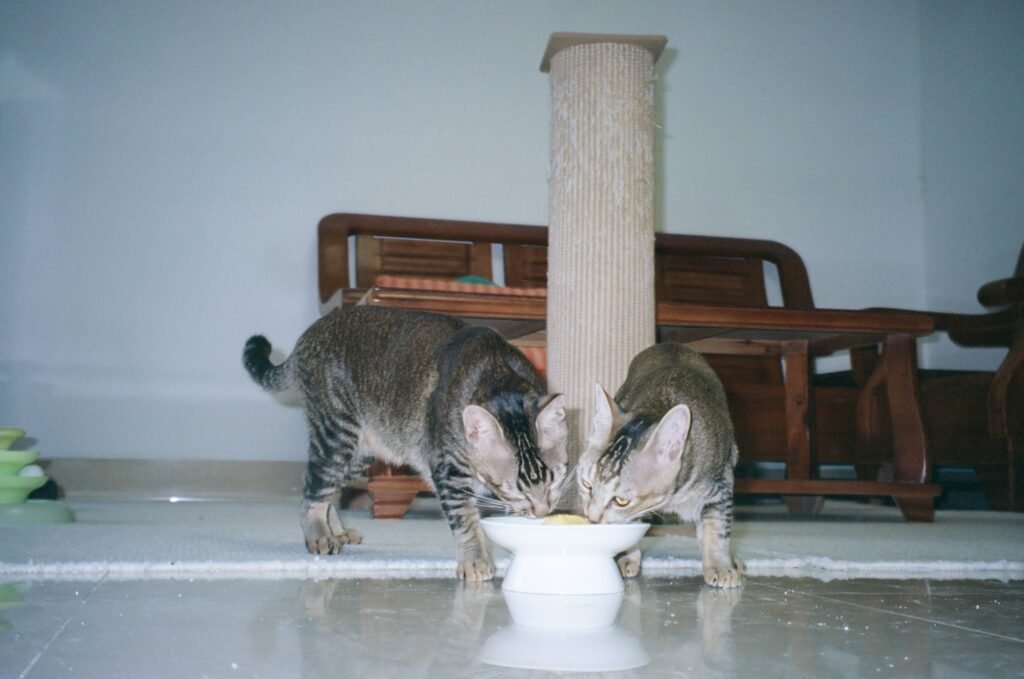
If you’ve ever watched one cat demolish another’s prescription food while the intended recipient looks on helplessly, you understand the daily frustration of multi-cat feeding. This scenario becomes even more stressful when one cat needs a special diet for health reasons while the other seems determined to eat everything in sight. Traditional feeding solutions like separate rooms or scheduled meal times work for some households, but they’re not always practical for busy cat parents.
Enter RFID technology for pet feeding — a game-changing approach that promises to solve food theft between cats once and for all. The One RFID Smart Feeder represents this new generation of intelligent feeding solutions, using collar-mounted tags to ensure only the right cat accesses their designated food. But does this petlibro rfid feeder review 2026 technology actually work in real households, or is it an expensive solution to a problem better solved through simpler methods?
We’ll examine how this smart feeder performs in multi-cat homes, what makes it different from basic automatic feeders, and whether the $139.99 investment delivers genuine value for cats and their owners.
How RFID Cat Feeders Actually Work
The One RFID Smart Feeder operates on a surprisingly simple principle that solves a complex problem. Each cat wears a lightweight collar tag containing a unique radio frequency identification chip. When the designated cat approaches the feeder, sensors read the RFID signal and automatically open the food compartment lid. Other cats without the matching tag find themselves locked out, unable to access the food inside.
This technology eliminates the guesswork and constant supervision that traditional multi-cat feeding requires. Unlike basic automatic feeders that dispense food on timers regardless of which cat is present, RFID feeders create individualized access control. The feeder remains sealed until the correct cat approaches, then opens specifically for them.
At $139.99, the One RFID Smart Feeder positions itself in the premium category of automatic pet feeders. This price point reflects the sophisticated technology required to accurately read RFID signals, control mechanical opening mechanisms, and integrate smartphone connectivity for remote monitoring and management.

The feeder connects to your home WiFi network, enabling app-based control and monitoring. Cat owners can track feeding times, portion sizes, and access patterns from anywhere, providing valuable insights into their pets’ eating habits. This connectivity also allows for remote troubleshooting and firmware updates to improve functionality over time.
One RFID Smart Feeder Features Breakdown
RFID Range and Accuracy
The effectiveness of any RFID feeder depends heavily on its ability to accurately detect the correct cat while ignoring others nearby. The One RFID Smart Feeder uses short-range RFID technology that typically requires cats to be within 2-3 inches of the sensor for reliable detection. This close proximity requirement actually works as a feature rather than a limitation — it prevents accidental triggering when cats simply walk past the feeder.
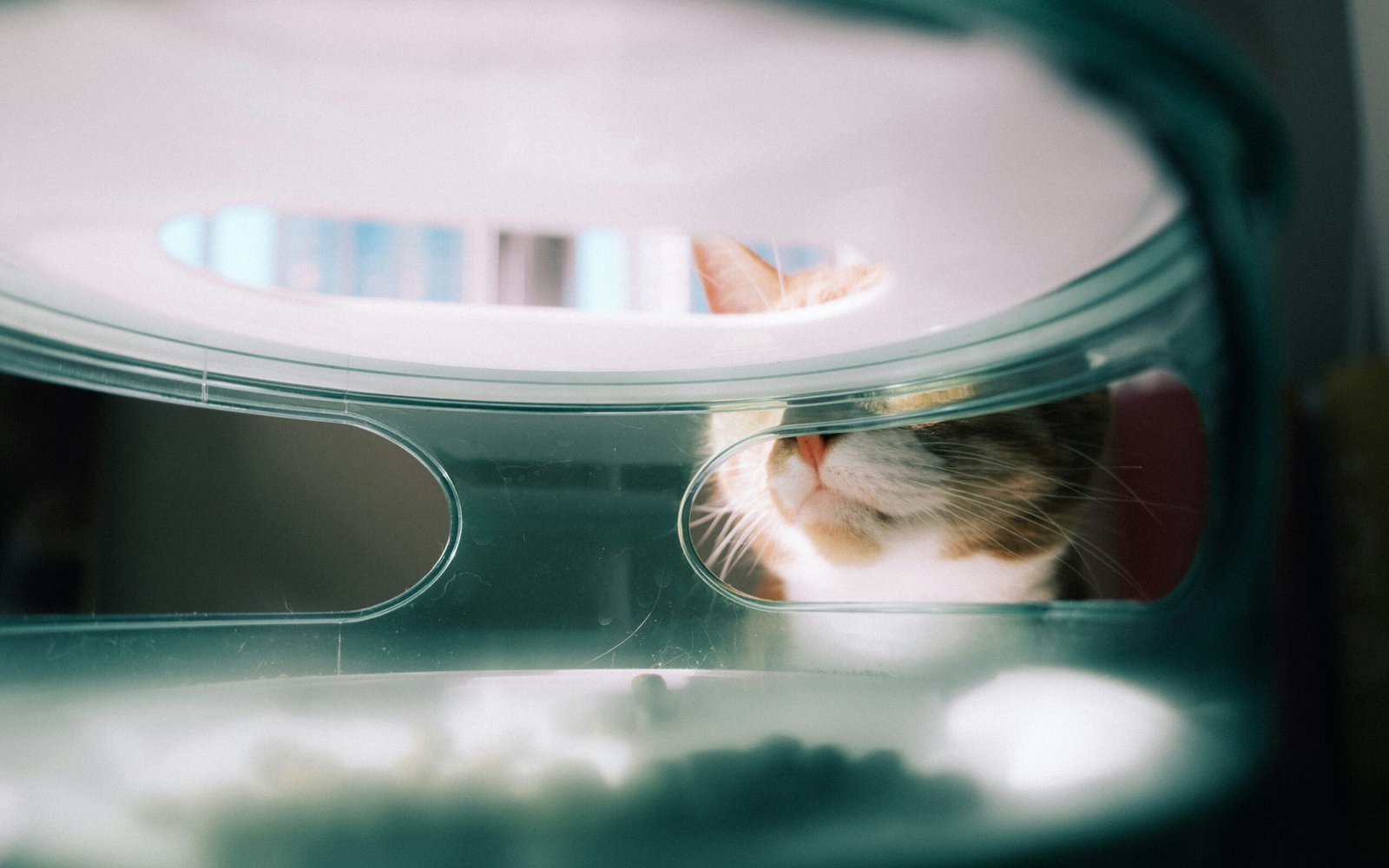
The system includes adjustable sensitivity settings through the companion app, allowing owners to fine-tune detection based on their specific household dynamics. This customization proves particularly valuable in homes where cats of different sizes might approach the feeder differently, or where one cat tends to be more cautious than others.
Food Capacity and Portion Control
Storage capacity often determines how practical an automatic feeder becomes for daily use. The One RFID Smart Feeder accommodates both dry kibble and semi-moist foods, though like most automatic feeders, it works best with dry food that flows consistently. The built-in portion control system allows owners to set specific serving sizes, helping prevent overeating while ensuring cats receive adequate nutrition.
The feeder’s app interface enables scheduling multiple meals throughout the day, each with customizable portion sizes. This flexibility proves essential for cats on special diets that require precise feeding amounts or specific timing to coordinate with medications.
Power and Connectivity
Reliable power supply and stable connectivity form the backbone of smart pet technology. The One RFID Smart Feeder operates on both AC power and backup batteries, ensuring continued operation during power outages. The battery backup typically maintains basic RFID functionality for several days, though smartphone connectivity may be limited without main power.
WiFi connectivity enables remote monitoring and control, but the feeder continues operating locally even if internet connection is lost. This hybrid approach provides peace of mind for cat owners who travel frequently or experience regular internet disruptions.
Physical Design and Maintenance
The feeder’s design balances functionality with practical considerations for daily use. Food-contact surfaces are constructed from safe, non-toxic materials that resist bacterial growth and allow for regular cleaning. The removable food bowl and accessible internal components make maintenance more manageable than some competing models.
The compact footprint works well in most kitchen or feeding area configurations without overwhelming the space. The neutral color scheme integrates easily with home decor, while the sturdy construction withstands typical wear from cats who might paw at or investigate the device.
How Well Does the One RFID Feeder Work in Petlibro RFID Feeder Review 2026?
Multi-Cat Accuracy in Real Households
The ultimate test of any RFID feeder lies in its ability to consistently distinguish between cats in real-world conditions. Most owners report that the One RFID Smart Feeder successfully prevents food theft between cats once properly configured. The key lies in ensuring each cat’s collar fits properly and that the RFID tags remain clean and undamaged.
However, some cats initially attempt to outsmart the system by staying close to their designated cat during feeding times. This behavior typically diminishes as cats learn that proximity alone won’t grant access to food. The learning curve varies by household, with some cats adapting within days while others may take several weeks to fully understand the new feeding routine.
Setup Process and Initial Training
Getting started with RFID feeding requires patience and systematic introduction. The initial setup involves collar fitting, app pairing, and gradually introducing cats to the new feeding system. Most cats adapt well to lightweight RFID collars, though some initially resist wearing any collar.
The training period often determines long-term success with RFID feeders. Cats accustomed to free-feeding or aggressive food competition may take longer to adjust to the structured access system. Starting with short supervised sessions and gradually extending feeding periods helps cats adapt without stress.
Daily Reliability and Common Issues
Once established in a household routine, RFID feeders generally operate reliably with minimal intervention. The most common issues involve collar maintenance — tags can become dirty or damaged, leading to inconsistent detection. Regular collar inspection and cleaning prevent most reliability problems.
Environmental factors can occasionally affect RFID performance. Metal surfaces near the feeder, electronic interference from other devices, or extreme temperature variations might impact detection accuracy. These issues are typically resolved through feeder repositioning or app-based sensitivity adjustments.
Maintenance Requirements
Regular maintenance keeps RFID feeders functioning optimally and ensures food safety. Daily tasks include checking food levels and ensuring the feeding area remains clean. Weekly maintenance involves cleaning the food bowl, wiping down sensors, and inspecting collar condition.
Monthly deep cleaning addresses areas where food dust or oils might accumulate, particularly around mechanical components. The app typically provides maintenance reminders and troubleshooting guidance, simplifying upkeep for busy cat owners.
One RFID Smart Feeder: Honest Pros and Cons
Understanding both the advantages and limitations of RFID feeding technology helps cat owners make informed decisions about whether this investment suits their specific household needs.
Advantages
- Eliminates food theft: Successfully prevents cats from accessing each other’s food, crucial for households with dietary restrictions or prescription diets
- Portion control: App-based serving size management helps prevent overeating and ensures consistent nutrition delivery
- Remote monitoring: WiFi connectivity enables feeding oversight even when away from home, providing peace of mind for traveling owners
- Customizable scheduling: Multiple daily meals with individual portion sizes accommodate complex feeding routines
- Backup power: Battery operation during power outages maintains basic feeding functionality
Limitations
- Collar dependency: System fails if cats remove or lose their RFID tags, requiring consistent collar wearing
- Initial cost: $139.99 represents significant investment compared to basic feeding solutions
- Learning curve: Both cats and owners need time to adapt to new feeding technology and routines
- Maintenance requirements: Regular cleaning and collar inspection necessary for reliable operation
- Technology limitations: WiFi connectivity issues or app problems can temporarily affect remote features
The One RFID Smart Feeder works best for households committed to solving specific multi-cat feeding challenges rather than those seeking simple convenience upgrades.
Is the One RFID Smart Feeder Right for Your Cats?
RFID feeding technology addresses specific challenges that traditional solutions struggle to resolve. This feeder proves most valuable for multi-cat households dealing with distinct dietary requirements, food aggression, or overeating issues that compromise cat health.
Cats on prescription diets benefit significantly from RFID access control. When one cat requires kidney-friendly food while another needs regular adult formula, preventing cross-contamination becomes essential for maintaining therapeutic benefits. The feeder’s precision eliminates the guesswork and constant supervision that manual feeding management requires.
Households with food-aggressive cats also see substantial improvement with RFID feeding. Cats who rush to finish their own food before stealing from others learn to eat at a more relaxed pace when they know their access remains secure. This behavioral change often improves digestion and reduces stress-related eating issues.
However, single-cat households or homes where cats peacefully share food without issues may not need the complexity and cost of RFID technology. Electronic feeding solutions work best when they solve genuine problems rather than replacing functional existing routines.
Consider your cats’ personalities and adaptability before investing in RFID feeding. Cats who tolerate collar-wearing and adapt well to routine changes typically transition smoothly to RFID systems. Those who resist collars or become stressed by feeding routine changes might struggle with the adjustment period.
RFID Feeder vs Regular Automatic Feeders
| Feature | One RFID Smart Feeder | Basic Auto Feeders | Manual Feeding |
|---|---|---|---|
| Individual Access Control | Yes – RFID collar tags | No – timer based only | Yes – with supervision |
| Portion Tracking | App-based monitoring | Limited or none | Manual measurement |
| Multi-Pet Capability | Designed for multiple cats | First-come, first-served | Requires separate stations |
| Setup Complexity | Moderate – collars and app | Low – timer programming | None |
| Price Range | $139.99 | $30-80 | $10-20 (bowls only) |
| Power Requirements | AC with battery backup | Batteries or AC | None |
| Prevents Food Theft | Yes – completely | No | Only with supervision |
This comparison highlights why RFID feeders command premium pricing — they solve problems that basic automatic feeders cannot address. The investment makes sense when food access control becomes essential for cat health and household harmony.
Other Options for Multi-Cat Feeding Problems
While RFID feeders offer high-tech solutions, simpler approaches sometimes prove equally effective depending on household dynamics and cat personalities. Understanding alternative strategies helps determine whether technology investment is necessary.
Separate feeding stations in different rooms work well for cats who don’t actively seek each other’s food. This approach requires dedicated space and consistent routine but eliminates technology dependency. Some owners find success with elevated feeding platforms that accommodate cats of different sizes or mobility levels.
Scheduled feeding times with supervision provide complete control over food access without equipment investment. This method works best for households with predictable schedules and cats who adapt well to structured meal times. However, it requires consistent human presence during feeding periods.
For cats who eat too quickly rather than stealing food, puzzle feeders can slow down fast eaters while providing mental stimulation. These feeders address overconsumption without the complexity of RFID technology, though they don’t prevent food theft between cats.
Microchip-activated feeders represent another technology option that uses cats’ existing identification chips rather than requiring additional collars. These systems often cost more than RFID feeders but eliminate collar dependency concerns for cats who resist wearing them.
Common Questions About RFID Cat Feeders
How close does my cat need to be for RFID feeder to work?
The One RFID Smart Feeder requires cats to be within 2-3 inches of the sensor for reliable detection. This close proximity prevents accidental triggering when cats walk past the feeder and ensures intentional feeding access. Most cats naturally approach this distance when investigating food sources.
What happens if my cat loses the RFID collar tag?
Without the RFID tag, cats cannot access the feeder, effectively locking them out of their food. Replacement tags are available from the manufacturer, though delivery time means temporary feeding alternatives become necessary. Some owners keep spare tags to prevent feeding disruptions from lost or damaged collars.
Can multiple cats share one RFID feeder?
The feeder can store multiple RFID tags in its system, but only one cat can access food at a time. This works well for cats eating the same diet but may create waiting periods during busy feeding times. Households with significantly different dietary needs often require multiple feeders or supplementary feeding methods.
How long do RFID feeder batteries typically last?
Battery backup systems in most RFID feeders provide 3-5 days of basic operation during power outages. The collar tags themselves use passive RFID technology that doesn’t require batteries. Main unit batteries need replacement every 6-12 months depending on usage frequency and environmental conditions.
Will shy cats be scared of automatic RFID feeders?
Some cats initially show caution around mechanical feeding devices due to unfamiliar sounds or movements. Gradual introduction with the lid propped open and manual feeding nearby helps nervous cats acclimate. Most cats overcome initial hesitation within a few days, though extremely anxious cats may need longer adjustment periods or alternative feeding solutions.
Should You Buy the One RFID Smart Feeder?
The One RFID Smart Feeder delivers genuine value for specific multi-cat household challenges, particularly when dietary separation becomes essential for cat health. The technology works reliably once established, effectively preventing food theft and enabling precise portion control that manual feeding methods struggle to maintain consistently.
However, success requires commitment to the learning curve and ongoing maintenance. Cats need time to adapt to collar-wearing and new feeding routines, while owners must maintain collar condition and system cleanliness. The $139.99 investment makes sense when it solves real problems rather than replacing functional existing arrangements.
Consider this feeder essential if you manage cats with conflicting dietary needs, food aggression issues, or overeating problems that impact health. For households managing specialized diets for health conditions, the precision and peace of mind justify the investment and complexity.
Skip this technology if your cats already eat peacefully without food theft, dietary conflicts, or portion control issues. Simple automatic feeders or traditional feeding methods serve these households adequately without additional complexity or cost.
Conclusion
The One RFID Smart Feeder represents a sophisticated solution to genuine multi-cat feeding challenges, using proven technology to eliminate food theft and provide precise dietary management. This petlibro rfid feeder review 2026 reveals a product that delivers on its core promises when properly implemented and maintained.
For households struggling with food aggression, dietary restrictions, or overeating issues between cats, this investment provides measurable benefits that improve both cat health and owner peace of mind. The technology works reliably, the app provides useful monitoring capabilities, and the build quality supports long-term use.
Success depends on realistic expectations about the learning curve and ongoing maintenance requirements. Consider your specific household dynamics, cat personalities, and commitment to technology-based feeding before making this investment. When the fit is right, RFID feeding transforms multi-cat meal management from daily stress into automated simplicity.