

The painful truth about self-cleaning litter boxes: those “14-day capacity” claims disappear fast with multiple cats, and most reviews won’t tell you about the mechanical failures that happen when the bin gets full. If you’re tired of expensive automatic boxes getting stuck upside down or requiring daily emptying despite the marketing promises, this brutally honest comparison cuts through the hype. We’ve identified the real capacity limits, common failure modes, and which models actually work for households with 2-3 cats. The best self-cleaning litter box in 2026 depends entirely on your specific situation — and most owners pick the wrong one because they believe the marketing instead of understanding the mechanics.
What Makes a Self-Cleaning Litter Box Actually Work for Multiple Cats
Self-cleaning litter boxes promise freedom from daily scooping, but the reality is far more complex than manufacturers admit. The critical factor isn’t the fancy sensors or smartphone apps — it’s mechanical reliability under real-world conditions with multiple cats using the same box.
The capacity math that manufacturers don’t want you to discuss is simple: most “10-day” or “14-day” claims assume one average-sized cat producing standard waste amounts. Add a second cat, and that timeframe drops to 3-5 days. With three cats, you’re looking at daily to every-other-day emptying, regardless of what the marketing materials promise.
More importantly, mechanical reliability becomes crucial when waste bins approach capacity. The motors and sensors that work perfectly with half-full bins start experiencing issues when overpacked. Common problems include incomplete rotation cycles, sensor misreads that trigger error modes, and the dreaded “stuck upside down” position that leaves your cats without a usable box.
Smart features like health tracking and app notifications sound appealing, but they’re secondary to basic mechanical function. A box that reliably completes its cleaning cycle every time, even when the waste compartment is nearly full, will serve your cats better than one with advanced features that fails when you need it most.
Our Top Self-Cleaning Litter Boxes for 2026
After examining the current market and considering real-world performance factors, we’ve identified two standout models that handle multi-cat households effectively. Each addresses different priorities, but both prioritize mechanical reliability over flashy features.
Neakasa M1 Plus: Best Overall Value
The Neakasa M1 Plus strikes the ideal balance between functionality and price point, making it our top recommendation for most multi-cat households. This model delivers the essential features without the premium price tag that often accompanies marginal improvements.
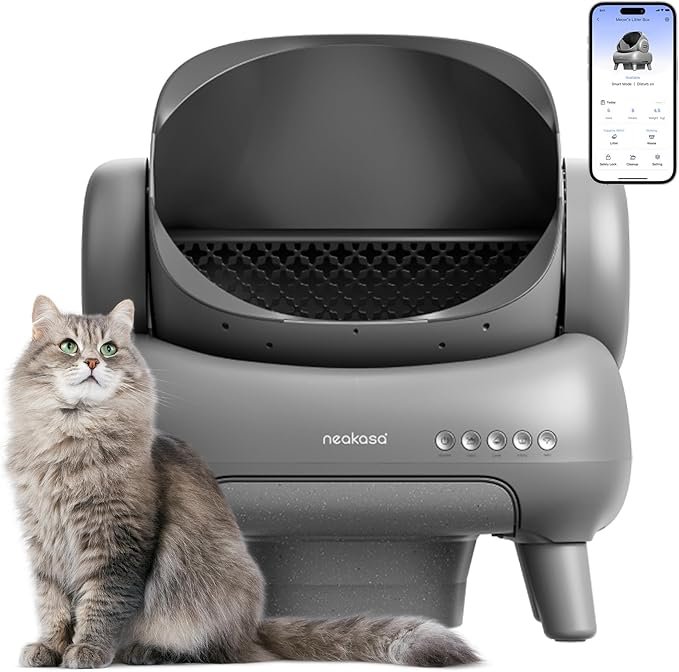
What sets the M1 Plus apart is its practical approach to capacity management. The waste compartment design prioritizes volume over aesthetics, providing more realistic multi-cat capacity. Based on user reports, this model handles 2-3 cats for 48-72 hours before requiring attention — a more honest timeframe than the week-plus claims of some competitors.
The app control functionality focuses on essential monitoring rather than unnecessary features. You’ll receive notifications when the waste compartment needs emptying, track usage patterns, and manually trigger cleaning cycles when needed. The interface prioritizes reliability over flashiness, which translates to fewer connectivity issues and more consistent performance.
Common issues with the M1 Plus typically relate to litter type compatibility and initial setup positioning. Using clumping litter that’s too fine can cause sensor confusion, while placing the unit on uneven surfaces can affect the rotation mechanism. These are preventable problems with proper installation and litter selection.
Luma Smart Litter Box: Premium Pick with Health Tracking
The Luma Smart Litter Box commands a premium price, but it justifies the higher cost with advanced features that appeal to health-conscious cat owners. This isn’t just about convenience — it’s about comprehensive pet health monitoring integrated into daily waste management.
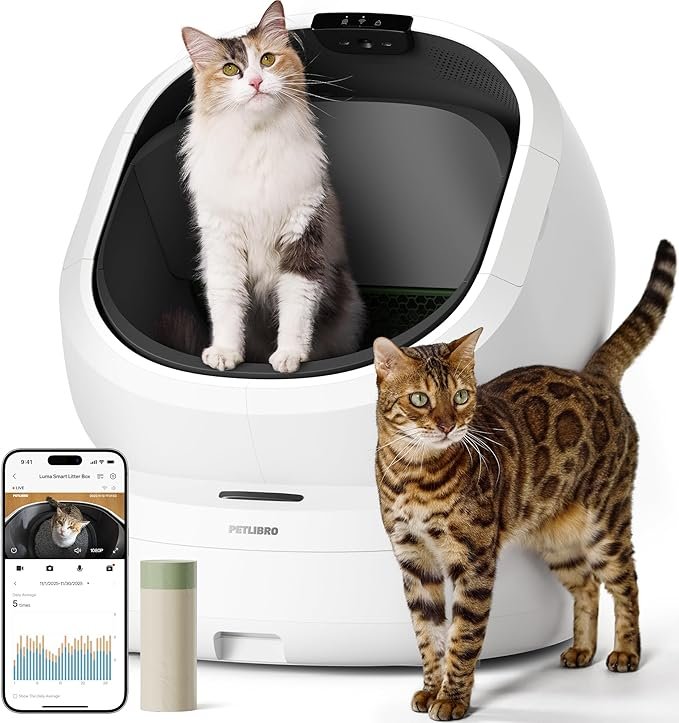
The standout feature is the health tracking capability that can differentiate between multiple cats. Using weight sensors and usage pattern recognition, the Luma attempts to track individual cat bathroom habits, flagging potential health concerns like changes in frequency or duration. For households managing senior cats or cats with chronic health conditions, this monitoring provides valuable data for veterinary visits.
The advanced sensor array also contributes to more reliable mechanical performance. Multiple detection points help prevent the stuck-cycle issues that plague simpler models, though no automatic system is foolproof when dealing with unpredictable variables like litter clumping and varying waste consistency.
Long-term reliability considerations favor the Luma’s more robust construction, but this comes with trade-offs. Replacement parts cost more, and the complex sensor system introduces additional failure points. The warranty coverage and customer support quality become more important factors at this price point.
Side-by-Side Comparison: Capacity, Features & Reality Check
| Model | Real Capacity (2-3 cats) | Key Features | Common Issues | Best For |
|---|---|---|---|---|
| Neakasa M1 Plus | 48-72 hours realistic | App control, large waste compartment, quiet operation | Litter compatibility, setup sensitivity | Multi-cat households prioritizing value |
| Luma Smart | 48-60 hours with monitoring | Health tracking, advanced sensors, individual cat ID | Complex sensor failures, higher part costs | Health-conscious owners with senior cats |
The capacity comparison reveals an important truth: both models perform similarly under real multi-cat conditions, regardless of marketing claims. The difference lies in additional features and build quality rather than fundamental waste management capacity.
Feature comparison shows where the price difference justifies itself. The Neakasa focuses on core functionality with reliable basic features, while the Luma adds health monitoring and advanced sensors that appeal to specific use cases. Neither model revolutionizes the basic challenge of managing multiple cats’ waste output.
What Multi-Cat Owners Actually Experience
Real-world usage reveals patterns that laboratory testing and manufacturer specifications can’t capture. The most important insight: bin capacity becomes the limiting factor faster than most owners expect, especially during the initial adjustment period when cats are still adapting to the new box.
The 48-72 hour timeframe for emptying becomes realistic for most 2-3 cat households, but this assumes cats accept the new box immediately. During the transition period, expect more frequent monitoring as some cats may initially avoid the automated box, leading to inconsistent usage patterns.
Mechanical issues correlate strongly with bin fullness levels. Both models perform reliably when waste compartments remain below 70% capacity, but reliability drops significantly as bins approach full capacity. This creates a practical maintenance schedule that’s more frequent than advertised but still represents a significant time saving over daily scooping.
App functionality matters most for notifications and manual control — the health tracking features require consistent use patterns to provide meaningful data.
App functionality proves most valuable for basic notifications and manual cycle triggering rather than advanced analytics. The health tracking features, while impressive in concept, require several weeks of consistent usage to establish baseline patterns, and multi-cat households often find the individual identification less reliable than hoped.
How to Choose the Right Self-Cleaning Box for Your Cats
Single versus multiple cat considerations fundamentally change the decision matrix. Single-cat households can rely more heavily on advertised capacity claims and may find advanced features more useful since usage patterns remain consistent. Multi-cat households must prioritize mechanical reliability and realistic capacity expectations.
Size requirements for large cats over 15 pounds add another consideration. Both the Neakasa M1 Plus and Luma Smart accommodate larger cats, but the interior dimensions become more critical when multiple large cats share the same box. Measure your current litter box usage to ensure adequate space.
- Budget breakdown: initial cost versus ongoing maintenance
- Consider replacement part availability and costs
- Factor in litter type compatibility and ongoing costs
- Evaluate warranty coverage and customer support quality
- Account for potential backup litter box needs during maintenance
The total cost of ownership extends beyond the purchase price. Replacement bags, periodic deep cleaning supplies, and potential repair costs add to the long-term investment. Premium models like the Luma Smart typically have higher ongoing costs but may offer better warranty coverage.
Installation and Maintenance: What Nobody Tells You
Setup challenges go beyond following instruction manuals. Both models require level placement on stable surfaces, adequate clearance for rotation mechanisms, and proximity to reliable WiFi signals. The initial positioning affects long-term reliability more than most owners realize.
Cleaning schedule reality differs significantly from marketing promises. While the boxes self-clean the interior, the waste compartment, sensors, and rotation mechanisms require regular maintenance. Monthly deep cleaning prevents sensor issues and ensures mechanical components operate smoothly.
Replacement part costs and availability vary between models. The Neakasa M1 Plus benefits from more affordable replacement components, while the Luma Smart’s premium construction comes with correspondingly higher part costs. Both manufacturers maintain reasonable parts availability, but planning for eventual replacements affects total ownership costs.

Frequently Asked Questions
How often do you really empty self cleaning litter box with 3 cats?
With three cats, expect to empty the waste compartment every 24-48 hours, regardless of manufacturer capacity claims. The actual timeframe depends on your cats’ individual habits, litter type, and seasonal variations in waste production. Plan for daily monitoring during the first month to establish your household’s specific pattern.
Why does my automatic litter box get stuck upside down?
Upside-down positioning typically results from overfilled waste compartments or clumped litter interfering with the rotation mechanism. Both the Neakasa and Luma models include safety sensors to prevent this, but extremely full bins can override sensor accuracy. Empty the waste compartment and manually reset the unit to resolve the issue.
Do self cleaning litter boxes work for large cats over 15 pounds?
Both models accommodate cats up to 20+ pounds, but larger cats produce proportionally more waste, affecting capacity calculations. A 15-pound cat typically produces 30-50% more waste than the average 10-pound cat used in manufacturer testing. Adjust emptying schedules accordingly.
Self cleaning litter box app not working login issues?
App connectivity problems usually stem from WiFi signal strength or router compatibility issues. Both models require stable 2.4GHz connections and may struggle with newer WiFi 6 routers using default settings. Check signal strength at the box location and consider router placement adjustments.
Automatic litter box making crunching noise in door?
Crunching noises indicate litter or debris interfering with the entry mechanism. Power down the unit and manually clear any clumped litter from the door tracks and sensors. This maintenance prevents more serious mechanical issues and should be performed weekly.
Bottom Line: Which Self-Cleaning Litter Box Should You Buy?
For most multi-cat households, the Neakasa M1 Plus delivers the optimal combination of reliability, capacity, and value. The straightforward design prioritizes mechanical reliability over complex features, resulting in fewer potential failure points and easier maintenance.
The Luma Smart Litter Box justifies its premium for households where health monitoring provides genuine value. Senior cats, cats with chronic health conditions, or owners who want comprehensive usage tracking benefit from the advanced sensor array and individual cat identification features. The additional cost represents an investment in long-term health monitoring rather than just convenience.
What to expect in your first month: both models require adjustment periods for cats and owners. Plan for more frequent monitoring than advertised capacities suggest, budget for compatible litter types, and prepare backup traditional boxes during the transition. The time savings become apparent after the initial learning curve, but realistic expectations prevent disappointment.
The best self-cleaning litter box in 2026 ultimately depends on your household’s specific needs, but both models represent significant improvements over earlier generations of automatic litter boxes. Choose based on your priority: proven value and reliability (Neakasa M1 Plus) or advanced health monitoring features (Luma Smart).