The best angled cat scratcher for most homes is the wall-mounted angled scratcher lounge from The Meow Picks. It satisfies your cat’s natural urge to scratch and stretch simultaneously, saves floor space, and looks genuinely good on a wall. If you want something freestanding, the English Oak and Sisal Rope Cat Scratcher is a durable, design-led alternative built to last.
Quick picks by situation:
- Small apartment or vertical-space lover: Wall-mounted angled lounge (saves floor footprint, doubles as a perch)
- Large or heavy cat: Sisal-on-wood freestanding scratcher with a wide, weighted base
- Budget-first or multi-cat home: Corrugated cardboard angled pad with replaceable inserts
Measure your wall or floor space before you order, confirm the weight limit fits your cat, and place the scratcher within arm’s reach of wherever your cat already scratches.
Table of Contents
- What types of angled cat scratchers are out there?
- How do you choose the right angled scratcher?
- How do you get your cat to actually use it?
- How long do angled scratchers last, and how do you care for them?
- Designer angled scratchers The Meow Picks recommends
- What specs should you check before buying?
- How long does delivery take?
- What do buyers say about angled scratchers?
- How do popular angled scratcher styles compare?
- Key Takeaways
- Why designer scratchers are worth the investment
- The Meow Picks angled scratcher collection
- Sources and further reading
What types of angled cat scratchers are out there?
The angle is what makes these scratchers special: that slanted surface lets a cat dig in with full body weight while stretching the spine and shoulders at the same time. The material underneath that angle, though, changes everything about durability, cost, and whether your cat will actually use it.
Corrugated cardboard
Lightweight, inexpensive, and almost universally loved by cats. The rough texture grabs claws satisfyingly, and many corrugated pads come with catnip infusion technology that releases scent with each scratch to pull cats in from day one. The downside is lifespan: a dedicated scratcher can shred a cardboard pad in weeks. Look for reversible or replaceable insert designs that let you flip or swap the corrugate block rather than tossing the whole unit.
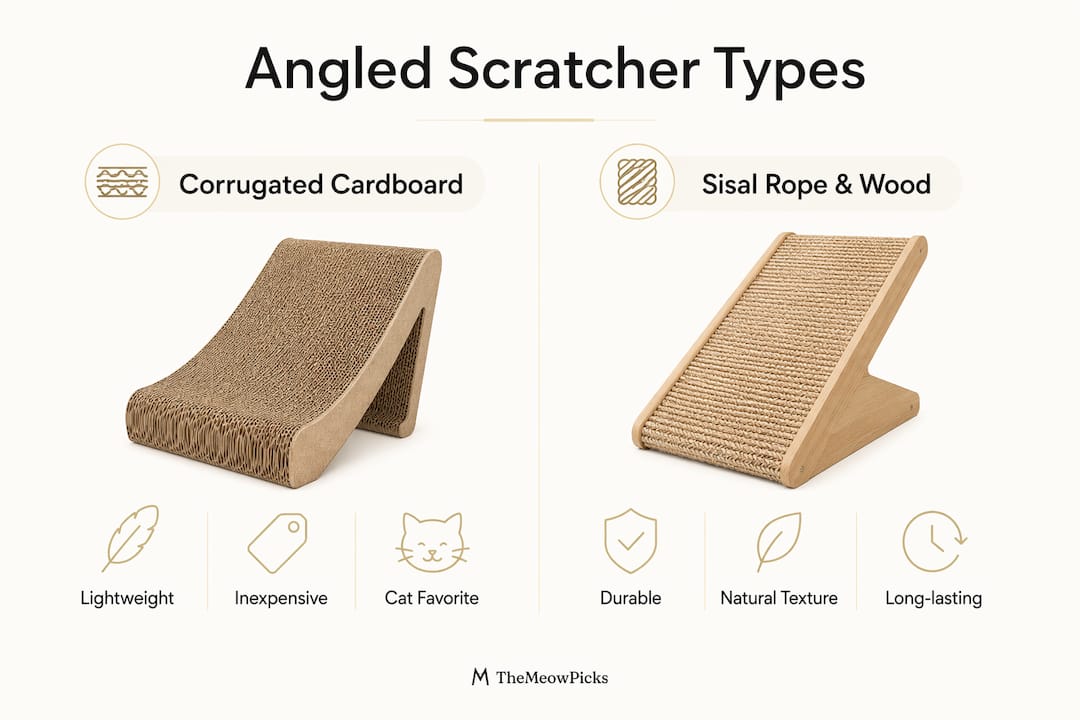
Sisal rope and sisal-wrapped ramps
Sisal is the gold standard for durability. The natural rope texture mimics tree bark, which triggers a cat’s instinct to rake and grip. Sisal-wrapped angled ramps hold up to heavy, repeated scratching far longer than cardboard and tend to anchor better because the frames are usually wood or heavy plastic. They cost more upfront, but the cost-per-scratch over time is lower.
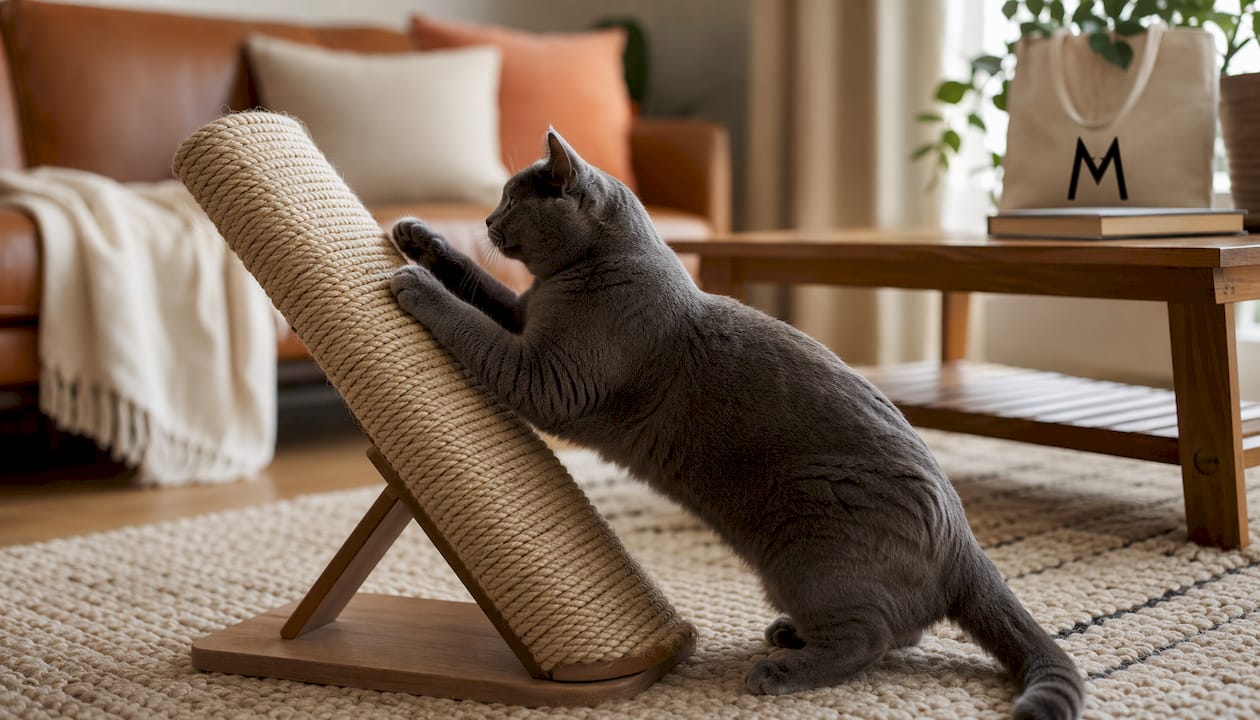
Carpet-on-wood angled loungers
These combine a solid wood frame with a carpet scratch surface, often adding a flat nap area at the top or bottom. They’re heavier, which means better stability for large cats. Some designs, like the Ware Slant Scratch with Bed, fold scratch, climb, and nap into one footprint. The trade-off: carpet can trap hair and dander more than sisal, so cleaning takes a little more effort.
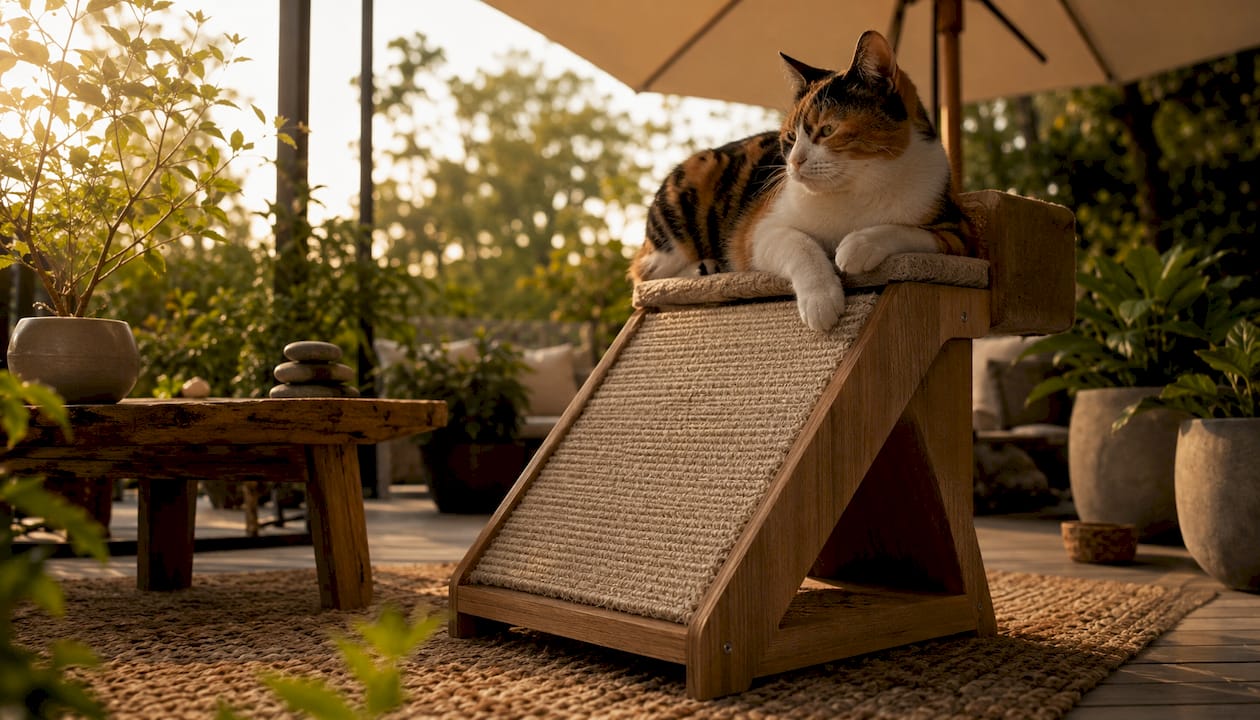
Wall-mounted angled lounges
Wall-mounted options let cats scratch from a low crouch or climb up for elevated lounging. They free up floor space entirely and add vertical territory, which matters for indoor cats. Installation requires a stud or anchor, but once up, they’re the most stable option available.
Pro Tip: Rub a small pinch of dried catnip into the surface when you first set up a new scratcher. Once your cat starts scent-marking it with their own paws and face, you can stop. Overusing catnip can make attraction dependent on the stimulant rather than habit.
How do you choose the right angled scratcher?
Start with your cat, not the scratcher. Here’s a focused checklist:
- Cat size and weight: Check the listed weight limit. A 15-pound Maine Coon needs a base that won’t tip; a kitten can use almost anything.
- Scratch style: Watch where your cat currently scratches. Vertical scratchers (like door frames) suggest they’ll love a tall angled ramp. Horizontal scratchers (rugs, carpet) often prefer a lower-angle pad.
- Footprint: Measure the space. Wall-mounted options need stud placement; freestanding ones need floor clearance.
- Stability: Weighted bases, non-slip feet, and wall anchors all prevent tipping. Tipping once can permanently scare a cat away from a scratcher.
- Multi-cat home: Go bigger and sturdier, or buy two. Cats rarely share a single scratcher without tension.
Price bands to expect:
- Corrugated cardboard pads: Generally the most affordable entry point, often sold in 2-packs or with replaceable inserts for better long-term value.
- Sisal ramp or post: Mid-range, with higher durability justifying the price over time.
- Carpet-on-wood or designer sisal-on-oak: Premium tier, but these often last years and complement home décor.
Quick decision matrix:
- Small apartment + kitten: Low-angle corrugated pad or wall-mounted lounge; prioritize compact footprint.
- Large cat + heavy scratcher: Wide-base sisal-on-wood; confirm weight limit before buying.
- Multi-cat home: Two separate scratchers placed in different rooms; luxury cat furniture with multiple scratch surfaces can reduce competition.
Some angled scratchers are also reversible: corrugated blocks that flip flat or prop at an angle extend the usable surface and delay replacement. Worth looking for if budget is a priority.
How do you get your cat to actually use it?
Placement is more than half the battle. Cats scratch to mark territory and stretch after rest, so put the new scratcher right next to wherever your cat already sleeps or scratches. Don’t tuck it in a corner they never visit.
- Place it near the problem spot. If your cat targets the sofa arm, set the scratcher directly beside it. Read more about redirecting sofa scratching for a full strategy.
- Introduce it during an active moment. Right after a nap or a play session, cats naturally want to stretch and scratch. That’s your window.
- Use catnip sparingly. A small pinch on the surface draws them in. Once they’ve scratched it a few times and left their own scent, the catnip becomes unnecessary.
- Reward immediately. A treat or a few seconds of play right after they use the scratcher builds the association fast.
- Redirect, don’t punish. If they head for the sofa, gently move them to the scratcher and reward the scratch. Punishment creates anxiety, not habits.
Pro Tip: Try the scent-transfer trick: gently press your cat’s paws onto the scratcher surface, or place a worn blanket nearby. Their own scent on the surface makes it feel familiar and safe, which speeds adoption considerably.
If your cat ignores the scratcher entirely after a week, try moving it closer to their favorite nap spot or dangling a wand toy over the surface to direct their paws onto it.
How long do angled scratchers last, and how do you care for them?
Lifespan varies a lot by material. Corrugated cardboard pads typically last a few weeks to a couple of months with a regular scratcher, though replaceable corrugate inserts extend the frame’s life significantly and lower the overall cost. Sisal-wrapped and carpet-on-wood designs can last a year or more with basic upkeep.
Cleaning by material:
- Cardboard: Vacuum loose shreds regularly. Replace the insert when the surface is fully shredded or compressed flat.
- Sisal: Brush off loose fibers with a stiff brush. Wipe the wood frame with a damp cloth. Sisal doesn’t need deep cleaning often.
- Carpet: Vacuum weekly to remove embedded hair. A pet-safe cleaning spray works well for spot-cleaning odors without harming the surface.
Safety checks to run monthly:
- Tighten any screws or bolts on freestanding frames.
- Check wall anchors on mounted units for any loosening.
- Inspect the base for wear that could cause wobbling.
- Replace cardboard inserts before the surface becomes so compressed that claws can’t catch.
Worn corrugated pads are generally recyclable in curbside cardboard bins. Check your local recycling guidelines, since some pads include adhesive layers that need separation first.
Designer angled scratchers The Meow Picks recommends
The Meow Picks curates scratchers that work for cats and look good in a real home. Here are the standout options:
-
Wall-Mounted Angled Scratcher Lounge: Mounts directly to the wall, freeing up floor space entirely. Cats can scratch from a low crouch or climb up to lounge at height. Best for small apartments, vertical-territory lovers, and owners who want a clean, modern look. Specs and weight limit are listed on the product page.
-
English Oak and Sisal Rope Cat Scratcher: Built from English oak with natural sisal rope wrapping. The combination of solid wood and sisal delivers the durability and bark-like texture cats respond to most. A strong choice for large cats or households where a scratcher needs to survive years of daily use. Made-in-USA construction is a trust signal worth noting.
-
Torre Cat Tower: A designer tower that integrates scratching surfaces with climbing and lounging. If your cat needs more than a single scratcher, this gives them a full activity center in one footprint. Best for active cats or multi-level homes.
Every purchase from The Meow Picks supports cat rescue organizations. That’s built into the model, not an afterthought.
What specs should you check before buying?
Retail listings for angled scratchers typically include dimensions, materials, and weight limits. These three numbers matter most:
- Dimensions (L x W x H): The Ware Angled Sisal Scratcher, for example, measures 12 x 12 x 12 inches. That’s a compact footprint suitable for most rooms, but a large cat needs more surface length to fully extend.
- Weight limit: Always check this for cats over 12 pounds. A scratcher that tips under a heavy cat won’t be used again.
- Assembly: Most freestanding scratchers require minimal assembly (attaching a base or tightening bolts). Wall-mounted units need a drill and wall anchors. Budget some time for assembly, which varies depending on the type.
Country of origin matters to many buyers. The Ware Angled Sisal Scratcher carries a Made-in-USA designation, and The Meow Picks surfaces this detail in its product listings where applicable.
How long does delivery take?
For most angled scratchers ordered through U.S.-based retailers or The Meow Picks, standard shipping typically delivers within 3–7 business days. Expedited options can bring that down to 1–2 business days for most locations. Wall-mounted units don’t require any curing time; you can install and introduce the scratcher the same day it arrives. Corrugated pads are ready to use straight out of the box.
What do buyers say about angled scratchers?
Across product listings and curated guides, the most consistent feedback on angled scratchers follows a clear pattern. Cats that previously ignored upright posts often take to angled surfaces immediately, likely because the angle better matches the stretch posture they naturally adopt. Buyers frequently mention that cardboard pads attract cats faster, while sisal-on-wood models earn praise for holding up through months of heavy use without losing structural integrity. Stability is the most common complaint when it goes wrong: a scratcher that wobbles or tips gets abandoned quickly. Buyers of wall-mounted options consistently report the highest long-term satisfaction, largely because stability is built into the wall itself.
How do popular angled scratcher styles compare?
| Feature | Corrugated cardboard | Sisal-on-wood | Carpet-on-wood | Wall-mounted |
|---|---|---|---|---|
| Best for | Kittens, budget buyers | Large cats, heavy use | Multi-function lounging | Small spaces, vertical territory |
| Durability | Short (weeks to months) | Long (1+ years) | Long (1+ years) | Long (structure permanent) |
| Stability | Low to medium | Medium to high | High | Highest (wall-anchored) |
| Price range | Lowest | Mid to premium | Mid to premium | Mid to premium |
| Assembly | None | Minimal | Minimal | Requires drill and anchors |
Key Takeaways
The most effective angled cat scratcher matches your cat’s size and scratch style, uses sisal or solid wood for durability, and is placed where your cat already wants to scratch.
| Point | Details |
|---|---|
| Match material to your cat | Sisal-on-wood suits large or heavy cats; cardboard works well for kittens and budget-first buyers. |
| Stability prevents abandonment | A scratcher that tips once is often ignored permanently; prioritize weighted bases or wall mounting. |
| Placement drives adoption | Position the scratcher next to existing scratch zones or sleep spots for fastest buy-in. |
| Cardboard inserts are replaceable | Choosing a frame with swappable corrugate pads lowers long-term cost and reduces waste. |
| The Meow Picks top pick | The wall-mounted angled scratcher lounge from The Meow Picks suits most homes and saves floor space. |
Why designer scratchers are worth the investment
Here’s the honest take from The Meow Picks team: most cat owners underestimate how much the design of a scratcher affects whether their cat uses it long-term. A wobbly, unattractive pad shoved in a corner gets ignored. A well-made, properly placed scratcher that fits the room becomes part of the cat’s daily routine.
The conventional wisdom is to buy cheap and replace often. But a cardboard pad that shreds in three weeks and ends up in the trash is neither economical nor satisfying for your cat. A sisal-on-oak scratcher that lasts two years, looks good next to your furniture, and gets used every single day is the better investment by almost every measure. The Meow Picks curates specifically for that intersection of durability, cat appeal, and home-friendly design. That’s not a marketing line. It’s the actual filter applied to every product in the collection.
The Meow Picks angled scratcher collection
The Meow Picks brings together designer scratchers from independent makers who build for real cats in real homes. Every piece in the collection is chosen for durability, cat appeal, and a design that doesn’t look out of place in a living room.
The Torre Cat Tower is the highest-priority pick for cat owners who want scratching, climbing, and lounging in one piece. Pair it with the Kip Cat Bed or The Cat Nest Bed for a complete rest-and-scratch setup. A portion of every order goes directly to cat rescue. Browse the full collection and find the scratcher that fits your cat and your space.
Sources and further reading
- Ware Angled Carpet and Wood Sisal Scratcher (Pet Life) — manufacturer product page with dimensions and Made-in-USA details
- SmartyKat Scratch Ladder Angled Corrugate Scratcher — product page covering catnip infusion technology and replaceable inserts
- SmartyKat Sisal Angle Ramp Cat Scratcher (Target) — retail listing with sisal-and-wood specs
- catWARE Angled Sisal Scratcher (DK Hardware) — product page for sisal-wrapped angled ramp
- Ware Slant Scratch with Bed and Rope — multi-function scratcher with integrated nap area
- Wall-Mounted Angled Scratcher Lounge (The Meow Picks) — The Meow Picks product page
- English Oak and Sisal Rope Cat Scratcher (The Meow Picks) — The Meow Picks product page with material and durability details
- How to Stop Your Cat Scratching the Sofa (The Meow Picks) — practical guide on redirecting scratching behavior
Always confirm dimensions, weight limits, and materials on the product detail page before purchasing, since specs can vary between colorways and size options.