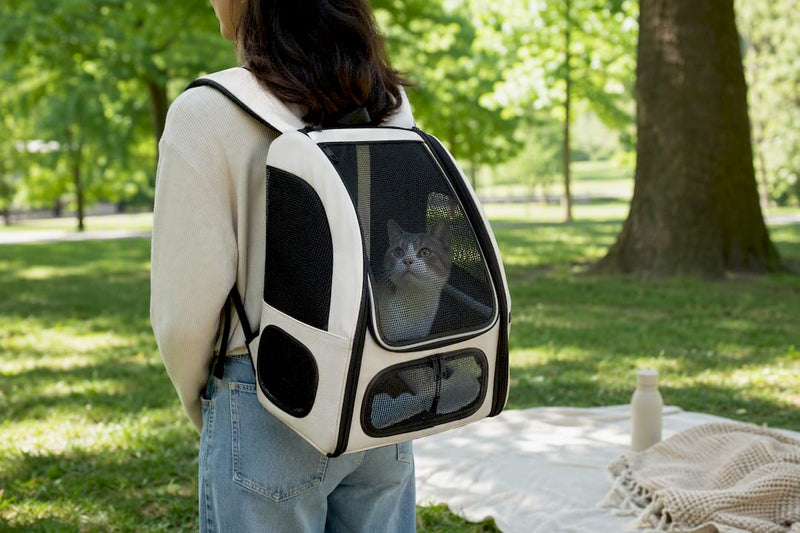
The three backpack carriers worth your attention at The Meow Picks are the Petkit Breezy 2 (best for ventilation-focused city commutes), the Nooee Ash (best for soft-sided, designer travel), and the Nooee Oliver (best for photo-ready style on short outings). All three meet the core safety criteria that Hill’s Pet identifies as non-negotiable: adequate ventilation, structural support, and an internal tether point for harness use.
- Petkit Breezy 2 — full-length mesh panels and a ventilation-first build make it the pick for warm-weather city use.
- Nooee Ash — felt construction with a soft-sided profile, ideal for owners who want a carrier that looks at home in a design-forward space.
- Nooee Oliver — quilted travel bag silhouette, suited for short outings where aesthetics matter as much as function.
Key Takeaways
A properly sized carrier with adequate ventilation and a harness-connected internal tether is the single most important factor in safe, comfortable cat travel.
| Point | Details |
|---|---|
| Size before weight limit | Confirm your cat can stand, turn, and lie down using listed interior dimensions, not just the weight capacity. |
| Ventilation is non-negotiable | Multiple airflow points prevent heat stress; watch for condensation in bubble designs as a warning sign. |
| Always use a harness | Clip a fitted harness (never a collar) to the internal tether every time the carrier is closed. |
| Car and air rules differ | Use a seatbelt loop for car travel; verify airline in-cabin dimensions and policy before flying. |
| The Meow Picks catalog | Product pages for the Petkit Breezy 2, Nooee Ash, and Nooee Oliver list exact specs to confirm fit and features. |
Table of Contents
- Which backpack carriers does The Meow Picks carry?
- How to choose the right backpack carrier for your cat
- How to train your cat to ride in a backpack carrier
- Safety rules for car, plane, and outdoor use
- What to pack and how to keep the carrier clean
- Why design and travel-readiness matter for cat owners
- Shop backpack carriers at The Meow Picks
- Sources
- FAQ
Which backpack carriers does The Meow Picks carry?
The Meow Picks curates a small, considered selection of pet carriers rather than listing dozens of options. Each product below links to its detail page, where you can confirm exact materials, interior dimensions, and weight limits before buying.
Petkit Breezy 2
Best for: Warm-weather commutes and city walks where airflow is the priority.
The Breezy 2 is built around ventilation. Full-length mesh side panels allow air to circulate from multiple directions, which matters on warm days or in crowded spaces. The product page lists exact interior dimensions and weight capacity. Check there for the internal tether point and entry configuration before purchasing.
Nooee Ash
Best for: Owners who want a soft-sided carrier that reads as a lifestyle accessory.
The Nooee Ash uses felt construction, giving it a quieter, more residential look than typical mesh carriers. Soft-sided carriers generally compress slightly to fit under airline seats, though you should always verify your airline’s in-cabin dimensions against the listed specs on the product page before flying.
Nooee Oliver
Best for: Short outings and photo-ready travel where the carrier’s appearance is part of the point.
The Nooee Oliver has a quilted travel-bag profile that works well for café visits, vet trips, or weekend errands. Confirm the listed interior dimensions match your cat’s standing height and body length before ordering.
How to choose the right backpack carrier for your cat
Size comes first. Your cat must be able to stand, turn around, and lie down inside the carrier. Hill’s Pet notes that weight limits alone do not guarantee adequate internal space, so compare your cat’s standing height and body length to the interior dimensions listed on the product page.
| Feature | Why it matters |
|---|---|
| Ventilation (mesh or holes) | Prevents heat buildup; multiple airflow points are safer than a single vent |
| Structural support | Keeps the floor from sagging so your cat has stable footing |
| Internal tether point | Clips to a harness to prevent escape if a zipper opens unexpectedly |
| Seatbelt loop | Secures the carrier to a car seat so it cannot slide or tip |
| Entry points (top, side) | More options make loading a reluctant cat easier |
| Ease of cleaning | Removable, washable liners reduce odor and bacteria buildup |
Soft-sided vs. bubble/hard-front: Soft-sided mesh carriers offer better passive airflow and usually compress enough for airline under-seat storage. Bubble or hard-front carriers give your cat a clear view, which some cats prefer, but Hill’s Pet warns that bubble designs can trap heat in direct sunlight. Condensation on the inside of a bubble window is an early sign of poor airflow. If you choose a bubble model, confirm it has active ventilation built in and keep it out of direct sun.
Pro Tip: On any product page, look for the seatbelt loop in the feature list or photos before you buy. If it is not listed, contact the seller to confirm before assuming it is included.
Pro Tip: Always use a properly fitted harness, never a collar, clipped to the internal tether. If a zipper opens accidentally, the harness keeps your cat secure inside the carrier.
How to train your cat to ride in a backpack carrier
The goal is calm, voluntary entry and comfortable tolerance for short outings. Most cats get there with patient, phased sessions. Wag! reports that training typically takes days to several weeks depending on temperament, and that kittens are generally easier to acclimate than older cats.
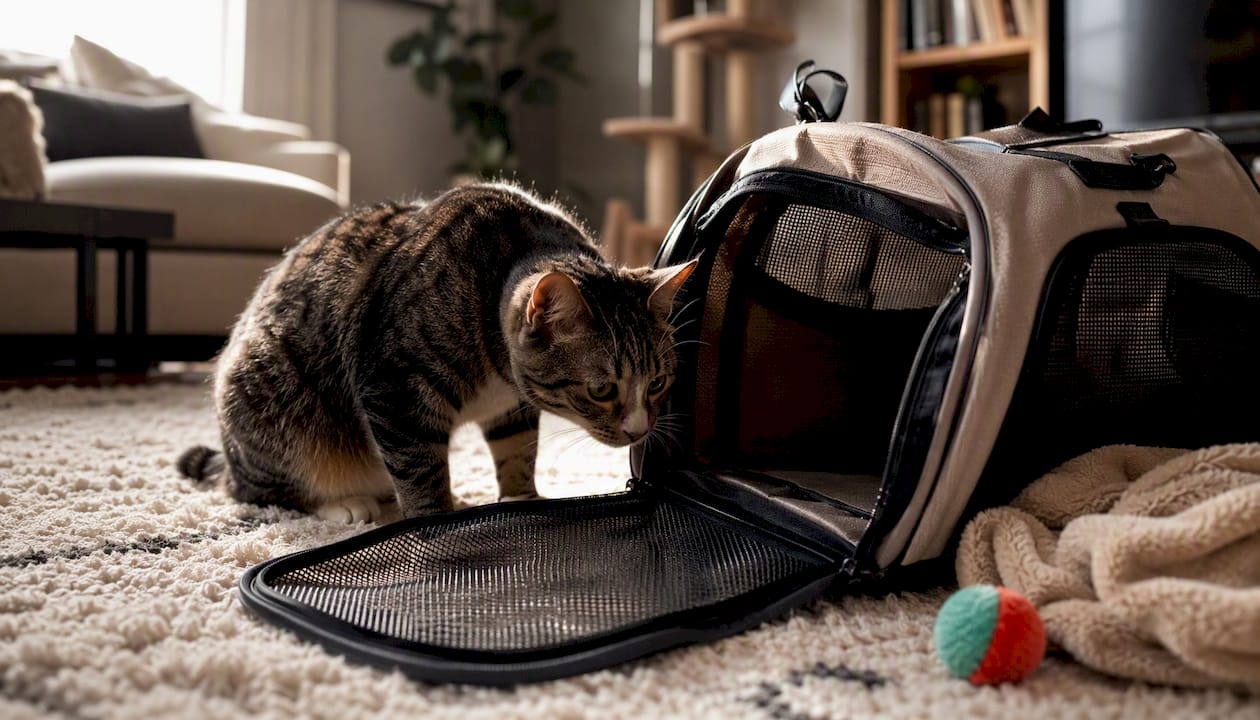
- Introduce the carrier as furniture. Set the open carrier in a room your cat uses. Leave it there for several days with a familiar blanket or worn T-shirt inside. Let your cat investigate on its own terms.
- Reward voluntary entry. When your cat steps inside, offer a high-value treat immediately. Do not close the carrier yet.
- Practice short closed sessions. Once your cat enters willingly, close the carrier for one to two minutes while staying nearby. Gradually extend the duration over several sessions.
- Add the harness and tether. Fit the harness at home before any outing. Clip it to the internal tether so your cat is used to the connection before you go anywhere.
- Wear the carrier indoors. Put the carrier on your back for five to ten minutes while your cat is inside. Let your cat feel the motion and your body heat before adding outdoor variables.
- Take a short outdoor trip. A five-minute walk around the block is enough for the first real outing. Watch your cat’s body language throughout.
- Practice car acclimation separately. Adventure Cats recommends starting with the engine running but the car stationary, then short driveway loops, before attempting any real drive.
- Gradually extend outing length. Add time only when your cat is relaxed at the current duration. If stress signs appear, shorten the session and repeat the previous phase.
Pro Tip: Keep sessions short and end them while your cat is still calm. A session that ends on a good note builds a positive association faster than one that runs until your cat is stressed.
Keeping the carrier out at home between trips, as Adventure Cats describes, prevents it from becoming a vet-only object your cat learns to dread.
Safety rules for car, plane, and outdoor use
A well-ventilated carrier with a secure harness connection is the foundation of safe travel. Beyond that, the rules differ by transport type.
Car travel:
- Secure the carrier to the seat using the seatbelt loop. Rover advises this prevents the carrier from sliding or tipping during braking.
- Place the carrier on the back seat, not the front, to keep it away from airbag deployment zones.
- Never leave a cat in a parked car, even with windows cracked.
Air travel:
- Measure the carrier against your airline’s published in-cabin dimensions before purchasing. Rover notes that policies vary by carrier and route, so verify directly with the airline.
- Confirm the airline accepts soft-sided in-cabin pet carriers on your specific flight.
Heat risk:
A cat’s normal body temperature sits between 101 and 102.5 degrees Fahrenheit. Interior carrier temperatures rising toward 85°F are associated with heat stress risk, making shade, airflow, and adequate ventilation non-negotiable on warm days.
Signs of stress to watch for:
- Panting, drooling, or rapid breathing
- Excessive vocalization or attempts to escape
- Flattened ears, wide pupils, or a tucked tail
- Lethargy or unresponsiveness
If you see any of these, end the outing, move to a cool and quiet space, and offer water. Keep first outings under 30 minutes until you know how your cat responds.
What to pack and how to keep the carrier clean
Short outing essentials:
- Water and a collapsible bowl
- A few high-value treats
- Familiar small blanket or worn item for scent comfort
- Harness and leash (even if you do not plan to let your cat out)
Longer trip extras:
- Portable travel litter box (check The Meow Picks litter accessories for compact options)
- Extra waste bags
- A copy of vaccination records if crossing state lines or visiting a vet
Wipe down hard surfaces with a pet-safe cleaner. Before every trip, check the zippers for smooth operation, inspect the tether hardware for wear, and press on the floor panel to confirm it has not lost structural support. A carrier with a compromised base can cause your cat to slide, which adds stress and reduces safety.
Why design and travel-readiness matter for cat owners
Most cat carriers are built for function alone, and that is fine for a twice-a-year vet visit. But for owners who want to bring their cat into daily life, a carrier that looks considered and travels well changes what is actually possible.
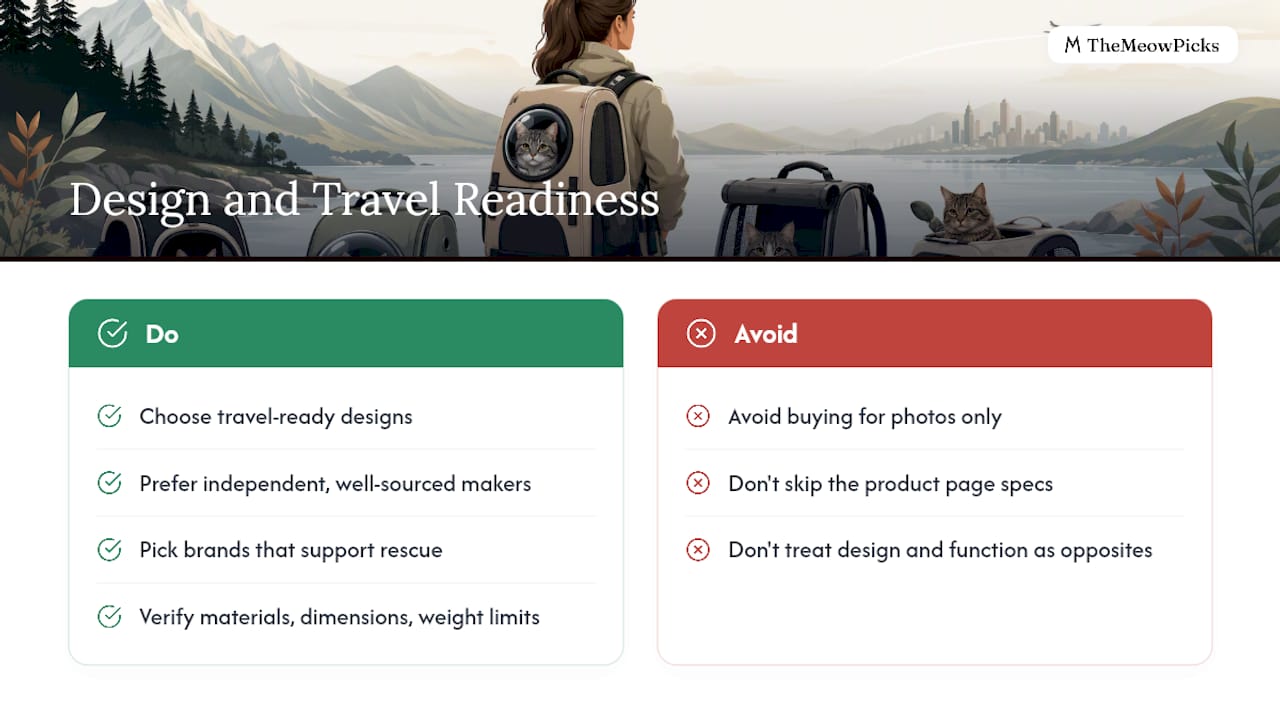
The Meow Picks exists because design and function are not opposites. The marketplace sources from independent makers who treat cat gear as something worth making beautifully, and a portion of every order goes toward cat rescue. That combination, thoughtful sourcing and rescue support, is the reason this guide focuses on carriers that hold up to real travel rather than just looking good in a photo.
Verify materials, interior dimensions, and weight limits on each product page before purchasing. Those specs are the ground truth, and no guide should substitute for them.
Shop backpack carriers at The Meow Picks
The Meow Picks lifestyle collection brings together travel-ready carriers and the accessories that make outings easier. Each product page lists exact materials, interior dimensions, and weight limits so you can confirm fit before ordering.
The featured carriers in this guide, the Petkit Breezy 2, Nooee Ash, and Nooee Oliver, each have their own product pages where you can check seatbelt loop availability, tether details, and airline-compatibility dimensions. If you are pairing a carrier with home comfort pieces, the Apawtment Cat House, Torre Cat Tower, and Perla Cat Cave are worth a look for cats who need a secure home base between adventures. Head to the product pages to confirm specs and check current availability.
Sources
- Cat Carrier Backpacks: How to Choose the Right One | Hill’s Pet
- Cat Backpacks to Totes: What to Know About Picking a Safe Carrier for Your Kitty | Rover
- How to teach your cat to ride in a backpack – Adventure Cats
- Train Your Cat to Ride in a Cat Backpack | Wag!
FAQ
What size backpack carrier does a cat need?
Your cat must be able to stand, turn around, and lie down inside the carrier. Compare your cat’s standing height and body length to the interior dimensions listed on the product page, not just the stated weight limit.
Are bubble backpack carriers safe for cats?
Bubble carriers are safe when they include active ventilation. Without it, direct sunlight can raise interior temperatures toward heat-stress levels. Condensation on the bubble window signals poor airflow and means you should move to shade or switch ventilation modes immediately.
How long does it take to train a cat to use a backpack carrier?
Training typically takes days to several weeks depending on your cat’s temperament. Kittens tend to acclimate faster than older cats. Short, consistent sessions that end while your cat is still calm produce the best results.
Do I need a harness inside a backpack carrier?
Yes. Clip a properly fitted harness (never a collar) to the carrier’s internal tether every time you close the carrier. If a zipper opens accidentally, the harness keeps your cat from escaping.
Can I use a cat backpack carrier on a plane?
Many soft-sided carriers fit under airline seats, but policies and size limits vary by airline and route. Measure the carrier against your specific airline’s published in-cabin dimensions and confirm their in-cabin pet policy before booking.