What is a cat ramp bed and why does your cat need one?
A cat ramp bed is exactly what it sounds like: a ramp placed against your bed that lets your cat walk up and down without jumping. For a healthy young cat, that might seem unnecessary. For a senior cat, a cat with arthritis, or one recovering from surgery, it can genuinely change their daily life.
The benefits go beyond convenience:
- Joint protection: Repeated jumping from bed height puts real stress on a cat’s knees, hips, and spine over time.
- Independence: Your cat can come and go on their own schedule, without waiting for you to lift them.
- Injury prevention: A ramp removes the landing impact that can worsen existing conditions like hip dysplasia or intervertebral disc disease.
- Peace of mind for you: No more watching your older cat struggle or hesitate at the edge of the mattress.
Ramps are recommended for joint health not just for senior cats, but as an ongoing preventative measure from a cat’s early years. Starting early means fewer problems later.
Table of Contents
- Types of cat ramps for beds and what sets them apart
- How to choose the right ramp for your cat’s needs
- What experts say about training cats to use ramps
- Keeping your ramp and cat bed clean
- Does your ramp work with your bed style?
- Popular brands and products worth knowing
- The Meow Picks has designer cat beds your ramp deserves to lead to
- Key Takeaways
Types of cat ramps for beds and what sets them apart
Not every kitty ramp is built the same way, and the differences matter more than you might expect.
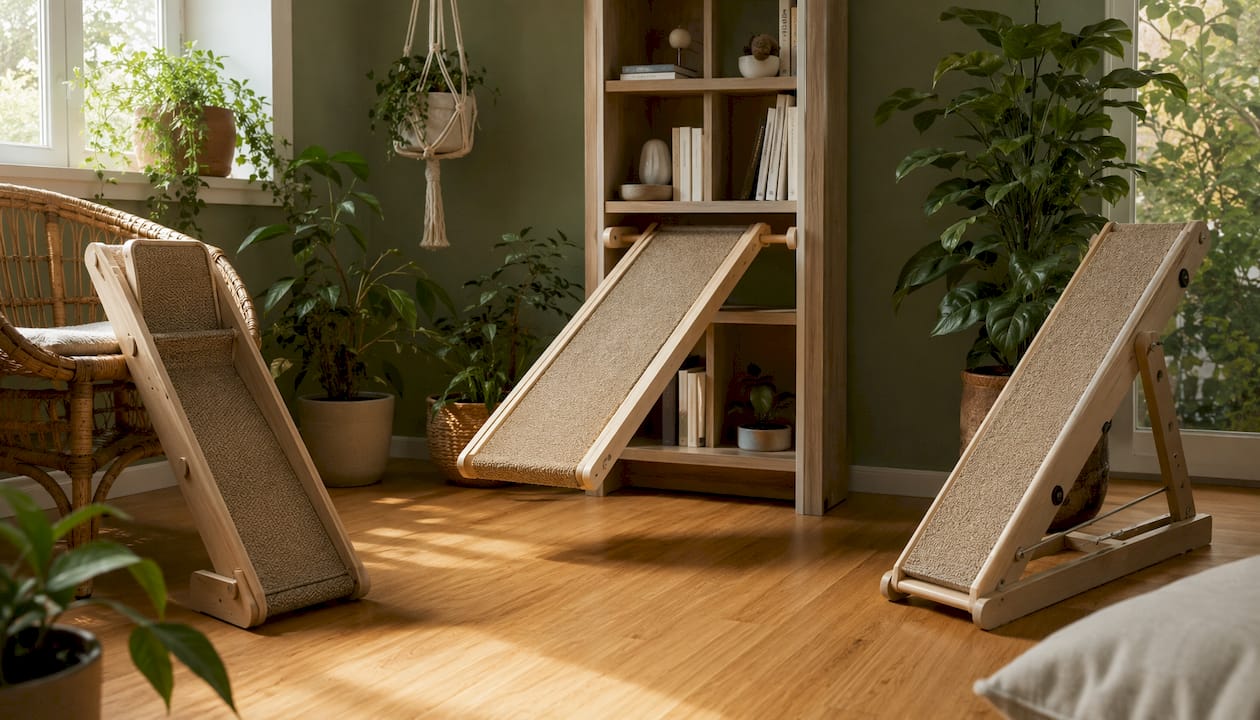
Foldable ramps are the most popular choice for bedrooms. They collapse flat for storage under the bed or in a closet, and most require no assembly. The ELECWISH folding wooden ramp, for example, adjusts to 7 height levels from 13 to 38 inches and arrives ready to use straight out of the box.
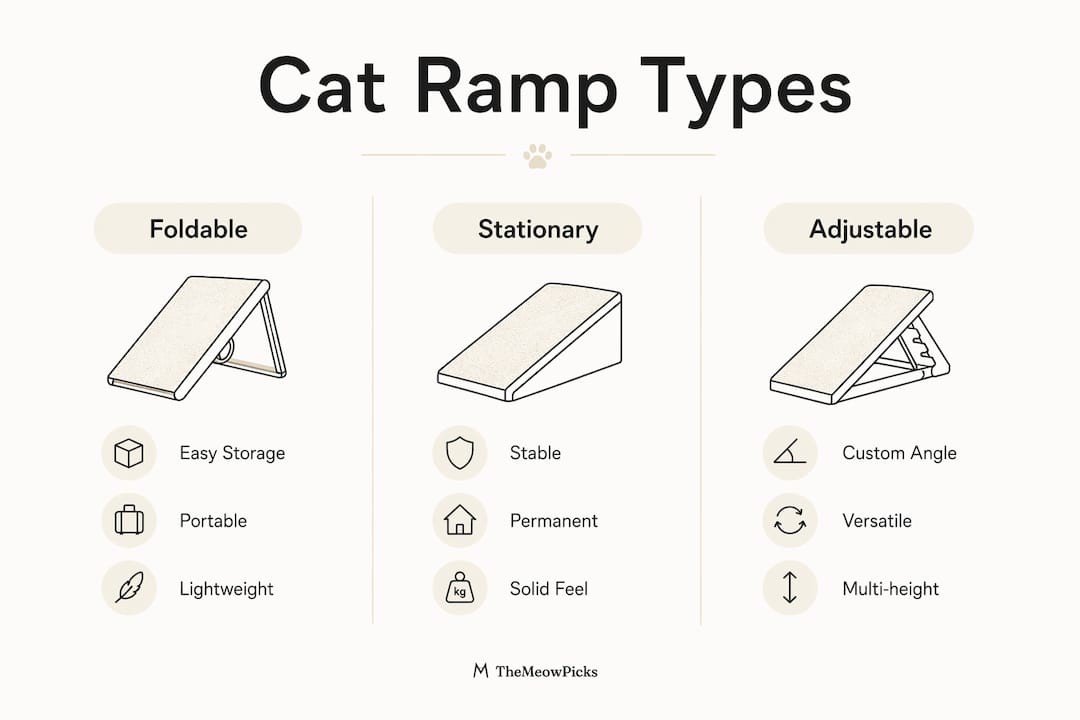
Stationary ramps stay in place permanently. They tend to feel more solid underfoot, which some cats prefer, but they take up more floor space.
Adjustable-height ramps are the most flexible option. They let you dial in the exact incline for your bed height and your cat’s mobility level. Gentler inclines mean less strain, which is especially helpful for cats with mobility challenges.
Step-style ramps combine stairs and a ramp surface, offering a gentler climb with natural pauses between levels.
Key features to compare:
- Surface material: Carpet, non-slip fabric, or claw pads all provide traction; bare wood alone is too slippery for most cats.
- Safety rails: Removable side rails guide cats and prevent sideways slips.
- Stabilizing hardware: Ropes or wooden blocks anchor the ramp to the bed frame, stopping it from sliding.
- Finish options: Wood ramps often come in cherry, white, or gray finishes to blend with bedroom furniture.
| Feature | Foldable Ramp | Stationary Ramp | Adjustable-Height Ramp |
|---|---|---|---|
| Storage | Folds flat | Fixed | Folds or fixed |
| Height flexibility | Limited | None | High |
| Best for | Most cats | Permanent setups | Senior/mobility-impaired cats |
| Typical length | 35–70 inches | 35–70 inches | 35–70 inches |
| Weight capacity | 100–120 lbs | 100–120 lbs | 100–120 lbs |
How to choose the right ramp for your cat’s needs
Start with your cat, not the ramp. A few honest questions will narrow the field quickly.
- How heavy is your cat? Most ramps support a weight capacity sufficient for virtually every domestic cat, but always confirm the listed weight capacity.
- How high is your bed? Measure from floor to mattress top. A ramp that reaches a suitable height handles most platform and king-sized beds.
- Does your cat have mobility issues? A longer ramp at a lower incline reduces joint strain far more than a short, steep one.
- How much floor space do you have? Ramp lengths typically run a range sufficient for most bedroom settings. A narrow cat ramp (around 14–16 inches wide) fits tighter bedroom layouts without blocking pathways.
- What’s your budget? Basic wooden ramps start around $40–$60; well-built adjustable models with safety rails run $80–$150. Spending a bit more on a stable, carpeted ramp usually pays off in how readily your cat adopts it.
For maintenance, look for ramps with removable carpet or washable fabric surfaces. Solid wood frames wipe clean easily; carpet inserts can be vacuumed or spot-washed. Check that the finish is pet-safe and won’t flake.
Pro Tip: Before committing, check the retailer’s return policy. Some cats take to a ramp immediately; others need a week or two. A generous return window removes the risk entirely.
What experts say about training cats to use ramps
The single biggest reason cats refuse a ramp is instability. If the ramp shifts or wobbles when they step on it, most cats will walk away and never try again. Securing the ramp with the included ropes or wooden blocks against the bed frame is not optional; it is the first thing to do before introducing your cat to it.
Once the ramp is firmly in place, positive reinforcement does the rest:
- Place the ramp where your cat already jumps, so the location feels familiar.
- Sprinkle a little catnip on the surface or place a treat at the top to create a reason to climb.
- Let your cat sniff and explore at their own pace; never force them onto it.
- Reward every successful trip up or down with a treat or calm praise.
Experts advocate ramps as a preventative investment that contributes to lifelong mobility, not just a tool for cats already in pain. Starting ramp use early, before joint issues develop, is the smarter approach. You can find more ideas for encouraging cats to embrace new furniture in The Meow Picks’ guide on keeping indoor cats happy.
A stable surface is the foundation of cat confidence. Cats that experience a ramp shifting underfoot are significantly less likely to use it again, regardless of how well-designed it is.
Keeping your ramp and cat bed clean
Ramps and cat beds collect fur, dander, and the occasional muddy paw print. A simple routine keeps both in good shape.
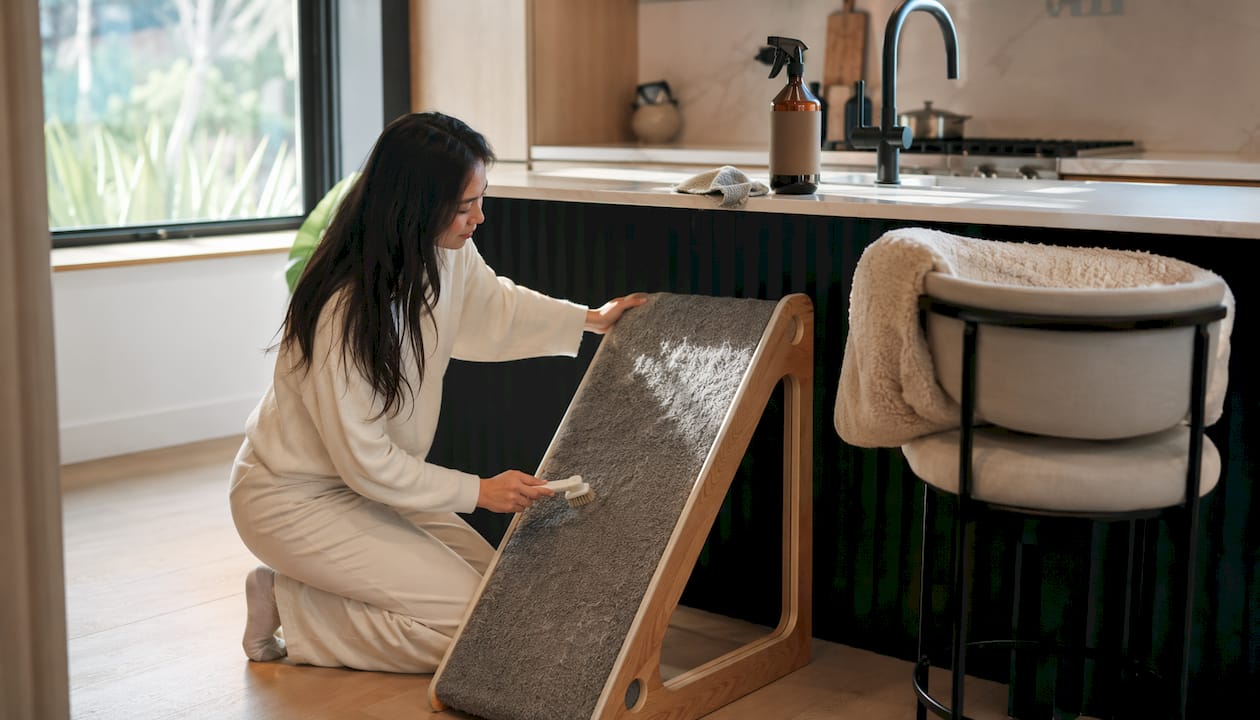
For carpeted ramps, a quick vacuum two or three times a week handles loose fur. Spot-clean stains with a mild, pet-safe cleaner and let the surface dry fully before your cat uses it again. Wood frames need only a damp cloth; avoid soaking the wood, which can warp over time. If your ramp has removable carpet panels, pull them off monthly for a deeper wash.
Cat beds with removable covers are the easiest to maintain. Wash covers on a gentle cycle in warm water, and check the care label for drying instructions. For beds without removable covers, a lint roller daily and a deeper spot-clean weekly keeps things fresh. Replacing a cat bed’s cover every six to twelve months is reasonable if your cat uses it heavily.
Does your ramp work with your bed style?
Most ramps are designed to lean against a standard bed frame, but the fit depends on your specific setup.
Platform beds sit lower to the ground, so a shorter ramp at a gentler angle works well. Tall beds, including some king and California king frames with thick mattresses, need a ramp that reaches at least 30–38 inches. Adjustable-height ramps handle both scenarios without any extra hardware.
For beds with storage drawers underneath, a foldable ramp is the practical choice since it tucks away when not in use. Beds with footboards may require placing the ramp at the side instead. Narrow cat ramps (14–16 inches wide) fit neatly alongside most bed frames without blocking the path around the room.
If your cat also uses a cat tower or wall shelves elsewhere in the home, a consistent non-slip surface across all their climbing furniture helps them build confidence faster.
Popular brands and products worth knowing
A few names come up consistently when cat owners shop for a pet ramp for their bed.
PetSafe CozyUp is one of the most recognized names in the category. Their bed ramp adjusts across multiple height settings, folds flat for storage, and uses heavy-duty carpet for traction. It’s a reliable, no-fuss option that suits most bedroom setups.
PawHut offers both step-style and ramp-style options in pine with non-slip carpet finishes. Their 3-step wooden model works well for cats that prefer a stair-like climb, while their foldable ramp handles taller beds.
ELECWISH stands out for its 64-inch length and seven adjustable height levels, making it one of the more versatile options for high beds. The solid wood construction and three removable safety rails give it a sturdy, well-finished feel.
Sandinrayli produces a 4-level adjustable wooden ramp with a gentle incline, designed specifically to reduce the risk of spinal injuries. The gray finish blends well with modern bedroom furniture.
For cat owners who want something that goes beyond function, The Meow Picks curates designer pieces like the Torre Cat Tower, the Kip Cat Bed, and The Cat Nest Bed, all chosen for their combination of good design and genuine comfort.
The Meow Picks has designer cat beds your ramp deserves to lead to

A well-chosen ramp is only half the picture; learn more about cómo diseñar la zona de descanso ideal para mascotas to create the perfect resting area for your cat. The bed at the top of it matters just as much. The Meow Picks curates cat beds and furniture from independent designers worldwide, pieces that are built for real comfort and look good in a real home. The Kip Cat Bed, The Cat Nest Bed, and the Torre Cat Tower are among the favorites, each chosen because they pair function with a design your cat and your bedroom will both appreciate. Every order also supports cat rescue, so your purchase does a little good beyond your own home. Browse the full collection at The Meow Picks and find the right destination for your cat’s next climb.
Key Takeaways
A cat ramp bed protects your cat’s joints, supports independence, and works best when it is stable, properly sized, and introduced with patience and positive reinforcement.
| Point | Details |
|---|---|
| Start early | Ramps benefit cats at every age, not just seniors; early use prevents long-term joint damage. |
| Match height to your bed | Look for ramps adjustable up to 38 inches to fit most platform and tall bed frames. |
| Stability comes first | Secure the ramp with ropes or wooden blocks; an unstable ramp discourages cats from using it. |
| Size and weight capacity | Most quality ramps support 100–120 lbs and range from about 35 to 70 inches long, fitting nearly all cats. |
| The Meow Picks | Pairs designer cat beds like the Kip Cat Bed and Torre Cat Tower with the comfort your ramp leads to. |