A litter box in a closet works, but only under specific conditions. The short answer: yes, a closet can be a practical, tidy spot for your cat’s box, provided you solve for ventilation, daily cleaning, and reliable access. Skip any one of those three, and the closet becomes a smell trap that your cat will eventually refuse to use.
Quick verdict:
- Pros: Hides the box from guests, contains scattered litter, keeps the box out of high-traffic rooms
- Cons: Poor airflow concentrates ammonia fast, stored clothing absorbs odors, and some cats avoid enclosed spaces
Three things to do in the next 15 minutes:
- Measure the closet floor space and confirm the box fits with room to spare on all sides
- Test airflow by holding a tissue near the door gap, then decide whether you need a fan or vent
- Commit to scooping once daily, minimum, before you move the box a single inch
As Wellbehavedcat, ventilation and daily cleaning are the two non-negotiables for a closet setup that stays fresh and protects stored items.
Key Takeaways
A litter box in a closet works reliably when ventilation, daily scooping, and surface protection are all in place from day one.
| Point | Details |
|---|---|
| Ventilation is non-negotiable | Keep the door ajar with a latch or install a cat door to prevent ammonia buildup. |
| Daily scooping is the top odor fix | No filter or fan replaces scooping; do it once daily at minimum. |
| Protect the floor and walls | Use a waterproof mat under the box and a vinyl panel behind it to prevent moisture damage. |
| Transition cats gradually | Move the box in small steps over 1–3 weeks and watch for avoidance or stress signals. |
| The Meow Picks offers alternatives | Designer enclosures like the Apawtment Cat House give concealment with better airflow than most closets. |
Table of Contents
- How to pick the right closet for a litter box
- Ventilation and odor control that actually make a closet work
- Protecting your closet floors, walls, and stored items
- Which litter box designs work best inside a closet
- Daily, weekly, and seasonal cleaning schedule
- How to transition your cat to a closet litter box
- What veterinarians say about enclosed litter boxes
- Alternatives to a bare closet, including designer options
- Stylish hidden litter solutions from The Meow Picks
- Sources
- FAQ
How to pick the right closet for a litter box
Not every closet qualifies. A coat closet near the front door, for example, gets slammed repeatedly and sits close to where guests arrive. That combination stresses cats and broadcasts odors. A linen closet off a hallway, or a walk-in closet in a low-traffic bedroom, tends to work better.
Use this checklist before committing to a space:
| Trait | What to look for | Red flag |
|---|---|---|
| Floor size | Enough room for the box plus 6–8 inches of clearance on each side | Tight squeeze with no turning room |
| Door type | Hinged door that can be propped open or fitted with a cat door | Bi-fold or sliding doors that close fully |
| Distance from food | At least one room away from feeding area | Same room or adjacent wall |
| Noise level | Quiet, low-traffic zone | Near washer, dryer, or HVAC unit |
| Floor material | Hard surface or easy-to-clean vinyl | Carpet (absorbs moisture and odors) |
| Existing airflow | Passive vent, gap under door, or window nearby | Completely sealed with no air movement |
Rover walk-in closets and open storage areas specifically because they tend to have more floor space and natural airflow. A door latch, such as a Door Buddy or FlexLatch, can hold the door reliably ajar while keeping dogs out. That small piece of hardware solves the airflow problem without requiring any construction.
For sizing, the box itself should take up no more than half the usable floor space. Your cat needs room to enter, turn a full circle, and dig without bumping a wall. A standard large box is roughly 18 by 24 inches; add your clearance margins and you need at least enough floor area to allow comfortable space to move around the box.
Ventilation and odor control that actually make a closet work
Ammonia from cat urine builds up fast in a sealed space. The good news is that a few low-cost fixes keep the air moving enough to prevent that buildup.
Ventilation options, from simplest to most involved:
- Keep the door ajar using a door latch or a rubber doorstop. This alone makes a significant difference.
- Install a cat door in the closet door so the cat can come and go while the door stays mostly closed.
- Add a small USB or battery-powered inline fan mounted near the top of the door frame, pushing stale air out.
- Install a passive vent grille in the lower panel of the door to allow air circulation without cutting a cat-sized hole.
- Run a nearby room fan on low pointed toward the closet opening to keep fresh air moving in.
Odor control works in layers. Ventilation handles airborne ammonia, but you also need to address the source directly. Onehappylemon adding a nightlight inside the closet and maintaining ventilation as part of a complete setup, not just one or the other.
Odor-control layers to stack:
- Scoop once daily (this is the single most effective step)
- Use a low-dust, clumping litter with activated charcoal
- Place an open box of baking soda on a shelf above the box, not inside the litter
- Add a charcoal filter pad inside any covered box
- Hang a cedar block or activated charcoal bag near stored clothing
Pro Tip: A small USB fan costs under $15 and moves more air than most plug-in air purifiers designed for closets. Save the air purifier for the room outside the closet, where it can handle any odor that escapes. Inside the closet, airflow beats filtration.
Protecting your closet floors, walls, and stored items
Litter scatter and moisture are the two biggest threats to a closet. Litter granules work their way into carpet fibers and under baseboards. Moisture from urine misses or high-humidity litter creates mold risk on wood floors and drywall.
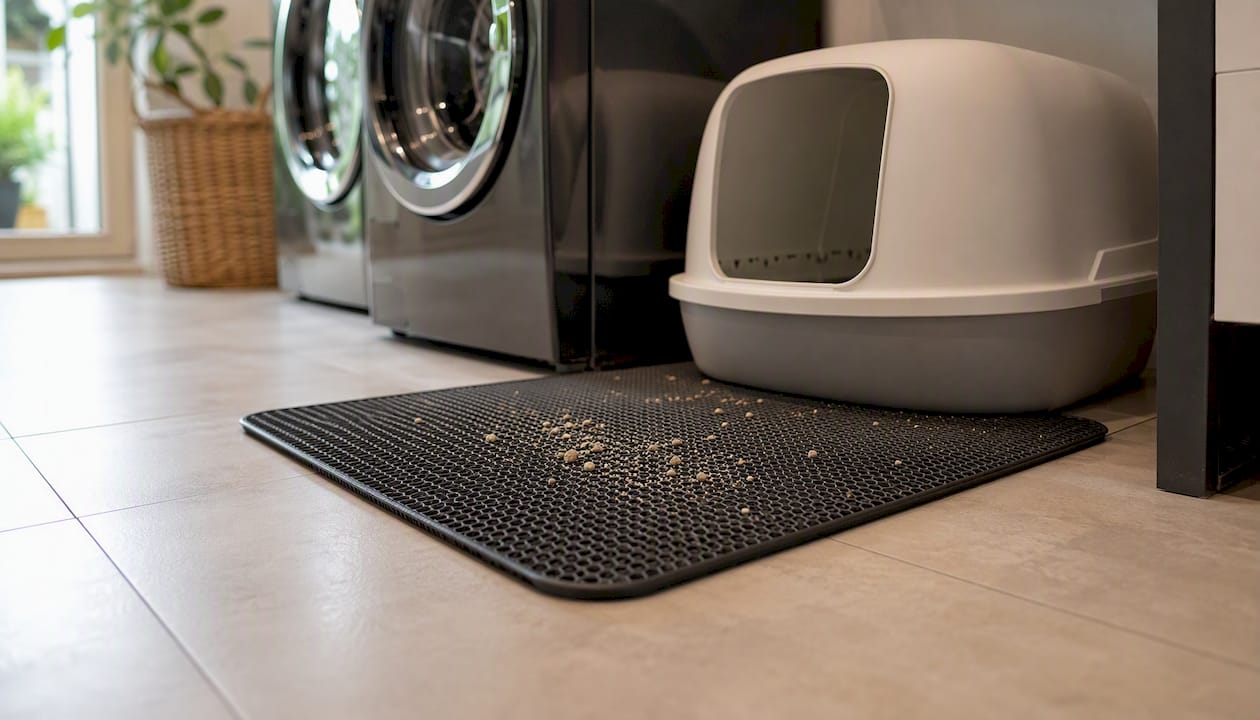
A waterproof rubber mat or rigid plastic tray under the box is the first line of defense. WellBehavedCat.com confirms that a waterproof mat or tray protects closet flooring from moisture, spills, and staining. Choose a mat that extends at least 12 inches beyond the front of the box so your cat’s paws land on it when exiting.
For walls, a peel-and-stick vinyl panel or a sheet of rigid plastic cut to size protects drywall from spray. This matters most in the corner directly behind the box. Cats occasionally urinate toward the back wall, and drywall absorbs odors permanently if it gets wet repeatedly.
Stored clothing and linens need a physical barrier. Move anything fabric to sealed bins or to upper shelves well above the box. Odors travel upward, so the higher the shelf, the less exposure. A cedar sachet in each bin adds a secondary layer of protection.
For litter tracking at the closet entry, a textured litter-catching mat placed just outside the door traps granules before they spread into the hallway. Shake it out daily when you scoop.
Which litter box designs work best inside a closet
The box style you choose affects both your cat’s comfort and how well odors stay contained in a small space.
| Box type | Privacy | Odor containment | Ventilation needs | Cleaning access |
|---|---|---|---|---|
| Open tray | Low | Low | Minimal | Easy |
| Covered hooded box | High | Moderate | Higher (needs airflow) | Moderate |
| Top-entry box | High | Good | Moderate | Moderate |
| Self-cleaning automatic | Moderate | Very good | Moderate | Low effort |
A top-entry box is often the best fit for a closet. It contains litter scatter well, gives the cat privacy, and does not require as much floor clearance as a large hooded box. The trade-off is that older cats or kittens may struggle with the jump.
For litter, prioritize low-dust formulas. Dust particles settle on stored clothing and irritate respiratory tracts in a confined space. Clumping litters with activated charcoal, such as those in The Meow Picks’ litter and accessories collection, handle odor between scoops better than non-clumping options. Avoid heavily scented litters; the fragrance mixes with ammonia and creates a sharper, more unpleasant smell than unscented litter alone.
Humidity tolerance matters too. Closets without active ventilation can get humid, which causes clay litters to clump prematurely and reduces their odor-absorbing capacity. A silica gel litter or a charcoal-enhanced clay formula holds up better in those conditions.
Daily, weekly, and seasonal cleaning schedule
Consistent cleaning is what separates a fresh closet setup from a smelly one. Behaviorists emphasize that daily scooping is the primary odor-control step, and no filter or ventilation system replaces it.
Daily tasks:
- Scoop all clumps and solid waste, morning or evening (pick one time and stick to it)
- Shake the mat at the closet entry and sweep any scattered litter
- Check the charcoal filter pad and replace it if it smells stale
Weekly tasks:
- Remove all litter, wash the box with unscented dish soap and warm water, and dry completely before refilling
- Wipe down the waterproof mat and the closet floor around the box with an enzymatic cleaner
- Shake out or launder any fabric items stored near the box
Monthly and seasonal tasks:
- Replace charcoal filter pads in covered boxes (most last 2–4 weeks; check the package)
- Inspect the closet walls and floor for moisture or staining and treat with enzymatic cleaner if needed
- Rotate stored items so nothing sits near the box long enough to absorb persistent odors
Supplies to keep on hand: a dedicated scoop, small trash bags or a lidded pail, biodegradable box liners, enzymatic cleaner (Nature’s Miracle or similar), baking soda, and replacement charcoal filter pads.
How to transition your cat to a closet litter box
Most cats adapt to a new litter location within one to three weeks, but the transition works best when you move gradually rather than all at once.
Step 1: Set up the closet box alongside the original
Place the new box in the closet while keeping the old box exactly where it is. Let your cat find the closet box on their own. Cats are curious; most will investigate within a day or two.
Step 2: Make the closet box more appealing
Sprinkle a small amount of used litter from the old box into the new one. The familiar scent signals to your cat that this is a safe place to go. Add a nightlight inside the closet if the space is dark.
Step 3: Gradually move the old box
After your cat uses the closet box consistently for several days, move the original box a few feet closer to the closet. Repeat every few days until the old box is at the closet entrance, then remove it entirely.
Typical timeline: Most cats make the full switch in 1–3 weeks. Cats that are older, anxious, or have had previous litter box issues may take up to six weeks.
Red flags that the setup is not working:
- Urinating or defecating outside the box, especially near the old location
- Visiting the closet but leaving without using the box
- Changes in stool consistency or urination frequency
- Excessive grooming or hiding, which can signal stress
If you see any of these signs, move the box back to the original location and reassess the closet setup before trying again.
What veterinarians say about enclosed litter boxes
Some veterinarians and feline behaviorists caution against fully enclosed litter spaces, and their concerns are worth understanding before you commit to a closet setup.
The core issue is airflow. In a sealed or near-sealed space, ammonia concentrations rise quickly. Cats have a far more sensitive sense of smell than humans, so a closet that smells faintly unpleasant to you may smell overwhelming to your cat. A cat that finds the box aversive will find somewhere else to go.
There is also a stress component. Some cats, particularly those with anxiety or a history of negative experiences, feel trapped in enclosed spaces. A closet with a single entry point can feel like a dead end.
Signs that warrant a veterinary visit:
- Straining to urinate or producing very small amounts
- Blood in urine or stool
- Crying out while using the box
- Complete avoidance of the box for more than 24 hours
- Sudden changes in elimination habits after a location move
The balance point is this: a closet with the door kept ajar, a fan for airflow, and daily scooping addresses most of the ventilation concerns. Purrfectly Trained Cat notes that accessibility, ventilation, and routine cleaning together determine whether a closet setup is comfortable for the cat. A fully sealed closet with a closed door is a different situation entirely, and most vets would advise against it.
Alternatives to a bare closet, including designer options
A bare closet floor is not the only way to hide a litter box. Furniture-grade litter enclosures are widely recommended for owners who want concealment with better natural airflow than a standard closed closet. Several options from The Meow Picks catalog fit this need well.
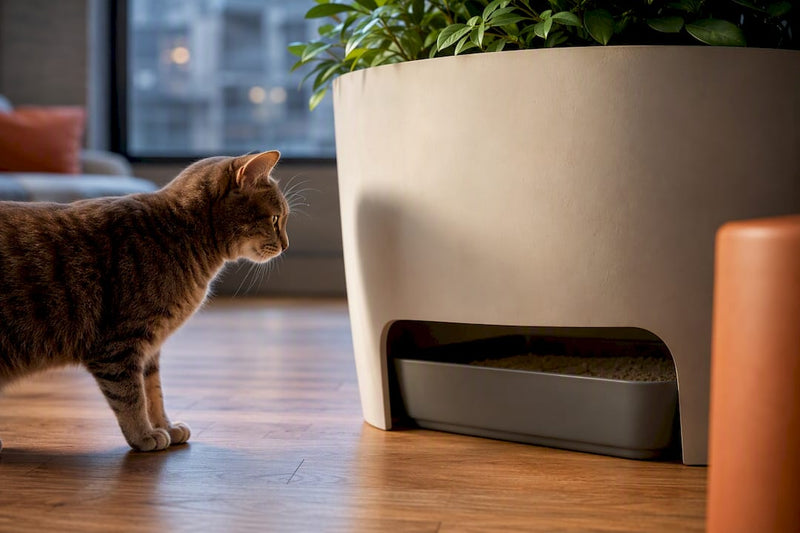
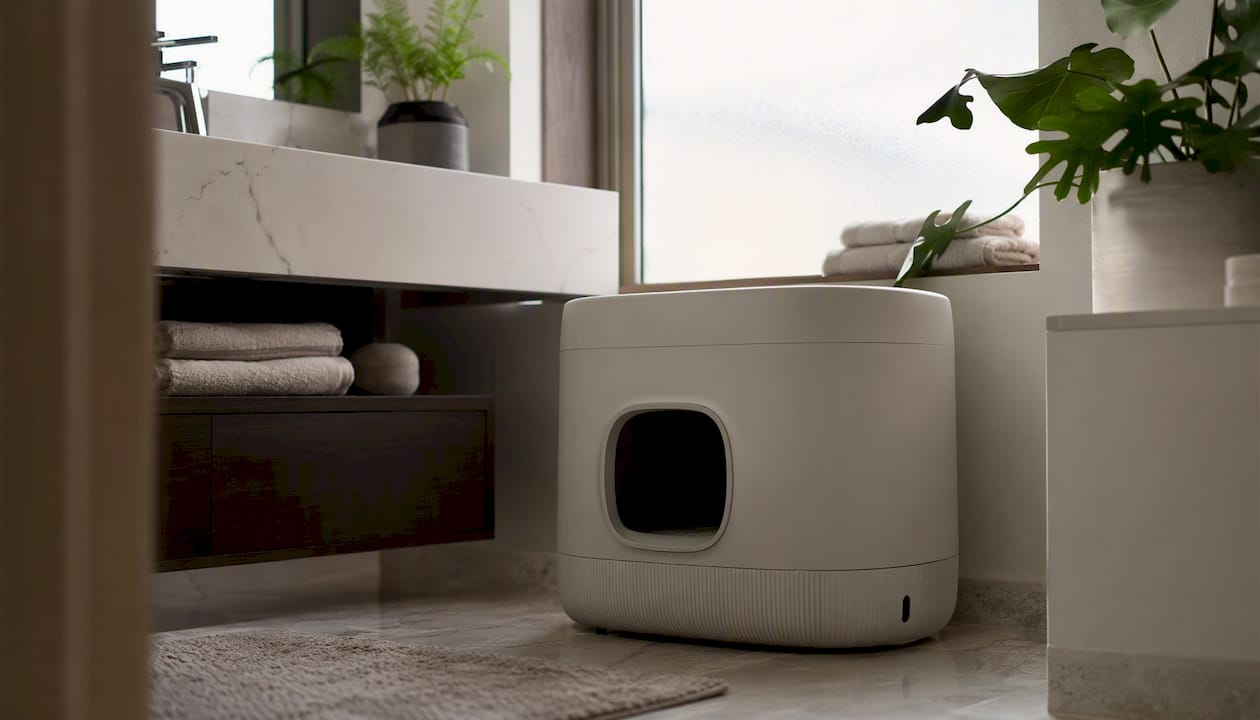
The Apawtment Cat House is a compact enclosure designed specifically to house a litter box in a small footprint. It looks like a piece of home furniture, so it blends into a living room or bedroom without announcing itself as a litter station. The enclosed design contains scatter while the entry opening provides passive airflow.
The Torre Cat Tower offers a multiuse structure that can incorporate a concealed lower compartment. For owners who want vertical enrichment alongside a hidden litter area, this is a practical two-in-one solution.
The Perla Cat Cave provides a sheltered, private space that suits cats who prefer a cozy, enclosed feel. It works well as a companion piece to a nearby litter setup, giving your cat a retreat separate from the box itself.
When to choose a furniture enclosure over a closet:
- Your closet has no good ventilation solution
- Stored clothing or linens make odor transfer a real concern
- You want a solution that looks intentional and designed rather than improvised
- Your cat is anxious and benefits from a dedicated, cat-specific space rather than a shared storage area
The modern cat furniture blog at The Meow Picks covers additional options for owners who want concealment that fits a contemporary home.
Our take from The Meow Picks Team
Concealed litter solutions get a lot of attention for how they look, and that is fair. Nobody wants a litter box as the focal point of their living room. But the detail that gets underweighted, consistently, is cleaning access. A beautifully hidden box that is awkward to scoop will get scooped less often, and that is where the real problems start. Whatever setup you choose, whether a closet, a furniture enclosure, or a purpose-built cabinet, prioritize the ability to get in and clean it quickly every single day. A setup you can maintain in under two minutes is always better than one that looks perfect but takes effort to access.
Stylish hidden litter solutions from The Meow Picks
If the closet setup feels like too many variables to manage, or you simply want something that looks intentional in your home, The Meow Picks carries a curated selection of designer litter enclosures from independent makers.

The Apawtment Cat House is a top pick for small apartments and tidy bedrooms. It houses a standard litter box inside a furniture-grade shell, keeping scatter contained and odors directed through a single opening rather than spreading through a closet full of clothing.
The Torre Cat Tower suits owners who want vertical enrichment and a discreet lower compartment in one piece.
The Perla Cat Cave offers a softer, more sheltered aesthetic for cats who love a cozy retreat.
Every purchase at The Meow Picks supports cat rescue organizations. Browse the full litter box collection to find the right fit for your space and your cat.
Sources
- Wellbehavedcat
- Where — And Where Not To – Put Your Cat’s Litter Box
- Top Places to Hide Your Litter Box
- Can You Put Litter Box in Closet? (Read This First!) - OneHappyLemon
- Can You Put a Litter Box in a Closet? Pros, Cons, and Tips - Purrfectly Trained Cat
FAQ
Is a litter box in a closet a bad idea?
No, but it requires active management. A closet works well as a litter location if the door is kept ajar for airflow, the box is scooped daily, and the floor is protected with a waterproof mat.
Where should you not place a litter box?
Avoid placing a litter box near your cat’s food and water, in a high-noise area like next to a washer or dryer, or in a fully sealed space with no airflow. These locations cause stress and litter box avoidance.
Why do vets caution against fully enclosed litter boxes?
Enclosed spaces concentrate ammonia, which cats find aversive due to their sensitive sense of smell. Some cats also feel trapped in single-entry spaces, which can lead to stress-related elimination problems.
What is the most sanitary place to put a litter box?
A low-traffic area with good airflow, a hard floor, and easy cleaning access is the most sanitary choice. A walk-in closet with the door propped open, or a furniture enclosure with a ventilated design, both meet these criteria when maintained with daily scooping.