
Your Bengal cat is bouncing off the walls at 3 AM, treating your curtains like a climbing gym and turning your coffee table into a racetrack. You’re scrolling through Amazon at midnight, staring at $200 cat exercise wheels and wondering: do cat exercise wheels really work for Bengal cats, or will you end up with an expensive hamster wheel collecting dust in your living room?
The honest answer? Cat exercise wheels can work brilliantly for Bengal cats — but only if you choose the right wheel and commit to proper training. Bengals are actually ideal candidates for exercise wheels thanks to their high energy levels, athletic build, and food motivation. However, success isn’t guaranteed, and we’ve seen plenty of $200 wheels turned into oversized cat beds.
We’ll walk you through everything you need to know: which wheels actually hold up to Bengal-level intensity, realistic training expectations, and honest assessments of whether this investment makes sense for your situation.
The Brutal Truth About Cat Exercise Wheels for Bengals
Let’s start with reality: most cats will never use an exercise wheel consistently. Many cat behaviorists suggest only a small percentage of cats become regular wheel users, even with dedicated training. But here’s where Bengal cats break the mold.
Bengals have several traits that dramatically improve their odds of wheel success:
- Extreme energy levels — They actually need the outlet an exercise wheel provides
- Athletic build — Their muscular frame and long legs suit the running motion
- Food motivation — Essential for training, and most Bengals are highly treat-driven
- Curiosity — They’ll investigate new objects rather than ignore them
- Routine-oriented behavior — Once trained, they often stick with the habit
However, even with Bengal cats, expect a 2-4 month training period minimum. Some cats take to it within weeks, others never adapt despite months of effort. The key is managing expectations and choosing equipment that won’t fail you during the training process.
What Makes a Cat Exercise Wheel Actually Work (Not Just Look Good)
Not all cat exercise wheels are created equal, and the difference between success and failure often comes down to engineering details that aren’t obvious from product photos.
Stability That Won’t Wobble After 6 Months
The biggest complaint we hear about cat exercise wheels is wobbling that develops over time. A 12-15 pound Bengal running at full speed creates significant lateral forces, and cheaper wheels simply can’t handle the stress.
Look for wheels with:
- Thick steel frame construction (not thin aluminum)
- Wide base spread for stability
- Quality bearings that won’t wear out quickly
- Reinforced connection points where the wheel attaches to the base
Wobbly wheels aren’t just annoying — they can actually harm training progress. Cats lose confidence in unstable equipment and may abandon it entirely after a bad experience.
Size Requirements for Bengal Cats
Bengal cats typically weigh 8-15 pounds and have longer legs than average house cats. This means “standard” 36-inch wheels often feel cramped and uncomfortable.
For Bengali cats, we recommend:
- Minimum 46-inch diameter — allows natural stride length
- 14-inch internal width minimum — prevents feeling trapped
- Weight capacity of 20+ pounds — provides safety margin for vigorous use
Smaller wheels force an unnatural gait that’s uncomfortable for large, athletic cats. This is why many “one size fits all” wheels fail with Bengal cats specifically.
Noise Levels (Your Downstairs Neighbors Will Thank You)
Bengal cats are often most active during dawn and dusk hours — exactly when noise complaints happen. A wheel that sounds like a freight train at 5 AM w
on’t last long in most households.
Quality wheels should produce minimal noise through:
- Precision-engineered bearings
- Foam or rubber contact surfaces
- Proper wheel balance to prevent vibration
- Solid base design that doesn’t amplify sound
Even the quietest wheels will produce some sound — cats running at 8-12 mph create inherent noise. But well-designed wheels keep it to conversational levels rather than machinery sounds.
Best Cat Exercise Wheels for Bengal Cats in 2026
We’ve evaluated the current market based on stability, size appropriateness for Bengals, noise levels, and owner feedback about long-term durability.
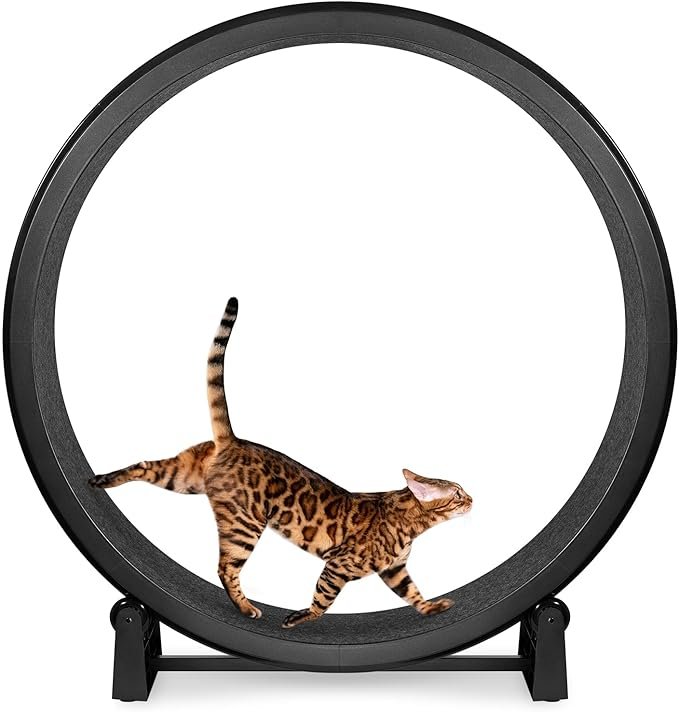
Best Overall: One Fast Cat Exercise Wheel Gen 7
The One Fast Cat Exercise Wheel Gen 7 represents the current gold standard for cat exercise wheels, specifically addressing the stability and durability issues that plague many competitors.
This stroller lets you take your Bengal on neighborhood adventures, providing mental stimulation and controlled outdoor exposure without requiring months of wheel training.
Why this works: Immediate usability with no training period. Bengals often enjoy the mental stimulation of outdoor sights and sounds. Folds for storage when not in use.
Trade-offs: Weather-dependent and requires your time investment. Doesn’t provide the same cardiovascular workout as independent wheel running.
Cat Exercise Wheel Comparison Table
| Product | Diameter | Weight Limit | Noise Level | Assembly Time | Wobble Risk |
|---|---|---|---|---|---|
| One Fast Cat Gen 7 | 48 inches | 25 lbs | Very Low | 2-3 hours | Minimal |
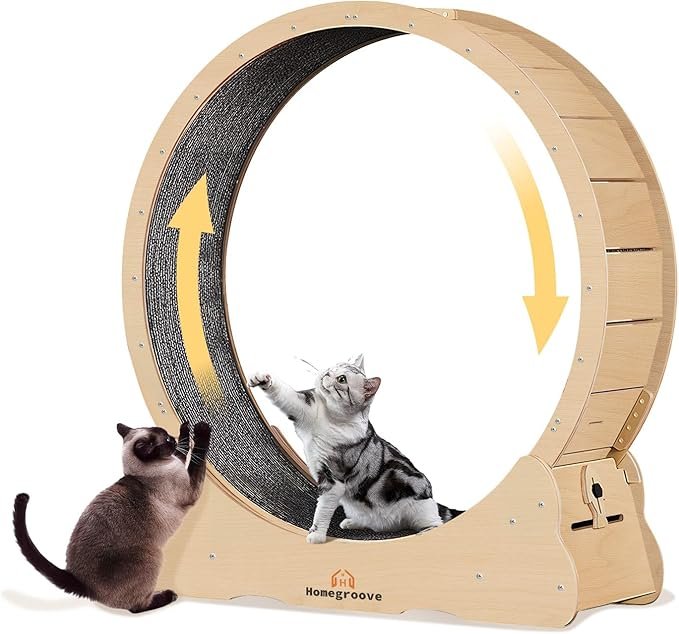
| Homegroove 46″ XL | 46 inches | 20 lbs | Low-Medium | 1-2 hours | Moderate |
| ROODO Stroller | N/A | 22 lbs | N/A | 30 minutes | N/A |
Will Your Bengal Cat Actually Use an Exercise Wheel?
Before investing in any exercise wheel, honestly assess your Bengal’s personality and your own commitment level. Success requires specific conditions that not every cat-owner combination can provide.
Personality traits that predict success:
- High food motivation (essential for training)
- Confident, exploratory nature
- Already active and playful
- Responds well to routine
- Not easily spooked by new objects
Warning signs your cat may never adapt:
- Extreme food pickiness or low treat motivation
- Fearful of new objects or changes
- Prefers hiding to exploring
- History of abandoning new toys quickly
- Overweight or low activity levels
Realistic timeline: Even successful Bengal cats typically need 2-4 months to become consistent wheel users. Some take 6+ months, and others never fully adopt the behavior despite dedicated training.
Your role is equally important. Training requires 10-15 minutes of daily sessions, patience during setbacks, and consistency over months. If you can’t commit to this schedule, even the best wheel won’t succeed.
How to Train Your Bengal to Use a Cat Exercise Wheel
Successful wheel training follows a specific progression that builds confidence and positive associations gradually.
Week 1-2: Introduction Phase
- Place wheel in main living area, let cat investigate freely
- Feed meals near the wheel to create positive associations
- Place treats on the wheel surface, reward any interaction
- Never force or push your cat onto the wheel
Week 3-4: Surface Comfort
- Encourage stepping onto the wheel with treats
- Reward standing on the surface, even briefly
- Gently hold the wheel still if cat seems nervous about movement
- Keep sessions short (5-10 minutes) and positive
Week 5-8: Movement Introduction
- Allow small amounts of wheel rotation while cat is on surface
- Use treats to encourage walking motions
- Gradually increase comfortable movement duration
- Watch for signs of stress and back off if needed
Month 2-4: Building Consistency
- Establish regular training times (ideally before meals)
- Gradually reduce treat frequency as behavior becomes natural
- Allow longer running sessions as comfort increases
- Troubleshoot any regression or avoidance behaviors
Common roadblocks and solutions:
- Wheel fear: Cover with familiar blanket initially, remove gradually
- Movement anxiety: Practice with wheel
locked stationary for longer
- Loss of interest: Try different treat types, change training times
- Inconsistent use: Ensure wheel location stays constant, maintain routine
5 Frequently Asked Questions
1. How long does it take to train a Bengal cat to use an exercise wheel?
Most Bengal cats need 2-4 months of consistent daily training to become regular wheel users. Some highly motivated cats show progress within 4-6 weeks, while others may take 6+ months or never fully adapt. Success depends on the individual cat’s personality, your training consistency, and the quality of the wheel.
2. Do cat exercise wheels get wobbly after a few months of use?
Cheaper wheels often develop wobbling issues after 6-12 months, especially with heavy use by active Bengal cats. This happens when bearings wear out or connection points loosen under stress. Higher-quality wheels like the One Fast Cat Exercise Wheel Gen 7 use reinforced construction and precision bearings to minimize this problem, but all wheels need periodic maintenance.
3. Are cat exercise wheels too noisy for apartments?
Well-designed wheels produce minimal noise — similar to a quiet fan running. However, cheaper wheels can sound like construction equipment, especially as bearings wear out. The biggest noise factor is often the cat’s claws clicking on the running surface and the natural sound of a 12-pound animal running at speed.
4. What size exercise wheel do I need for a large Bengal cat?
Bengal cats need a minimum 46-inch diameter wheel, with 48+ inches being ideal. Smaller wheels force an uncomfortable, cramped gait that most Bengals will reject. The internal width should be at least 14 inches, and weight capacity should exceed 20 pounds to handle vigorous use safely.
5. Will my indoor Bengal cat actually use an exercise wheel or ignore it?
Bengal cats have better success rates than most breeds due to their high energy levels and athletic build. However, success isn’t guaranteed — many Bengal owners report mixed results even with proper training. Food motivation, confidence level, and your training commitment are the biggest predictors of success.
Bottom Line: Are Cat Exercise Wheels Worth It for Bengal Cats?
Cat exercise wheels can be genuinely life-changing for the right Bengal cat and owner combination. We’ve seen dramatic improvements in behavior problems, weight management, and overall feline happiness when the match works well. However, this isn’t a guaranteed solution, and the financial and time investment is significant.
You’re a good candidate if:
- Your Bengal shows excessive energy and destructive behaviors
- You can commit to 2-4 months of daily training
- You have space for a large, permanent piece of equipment
- Your cat is food-motivated and confident
- You’re prepared for the possibility of failure
Skip the wheel if:
- You’re looking for a quick fix to behavior problems
- Your living situation is temporary or space is extremely limited
- Your Bengal is fearful, overweight, or low-energy
- You can’t maintain consistent training routines
- The financial investment would be a hardship
For Bengal owners who do move forward, we recommend starting with a quality wheel like the One Fast Cat Exercise Wheel Gen 7 rather than gambling on budget options. The higher success rates and long-term durability justify the upfront cost difference. Remember that wondering do cat exercise wheels really work for Bengal cats is normal — but with the right approach, training commitment, and equipment choice, many Bengal owners find these wheels become an integral part of their cat’s daily routine and mental wellbeing.
The key is approaching wheel training with realistic expectations, patience, and a backup plan for redirecting your Bengal’s energy if the wheel doesn’t work out.