
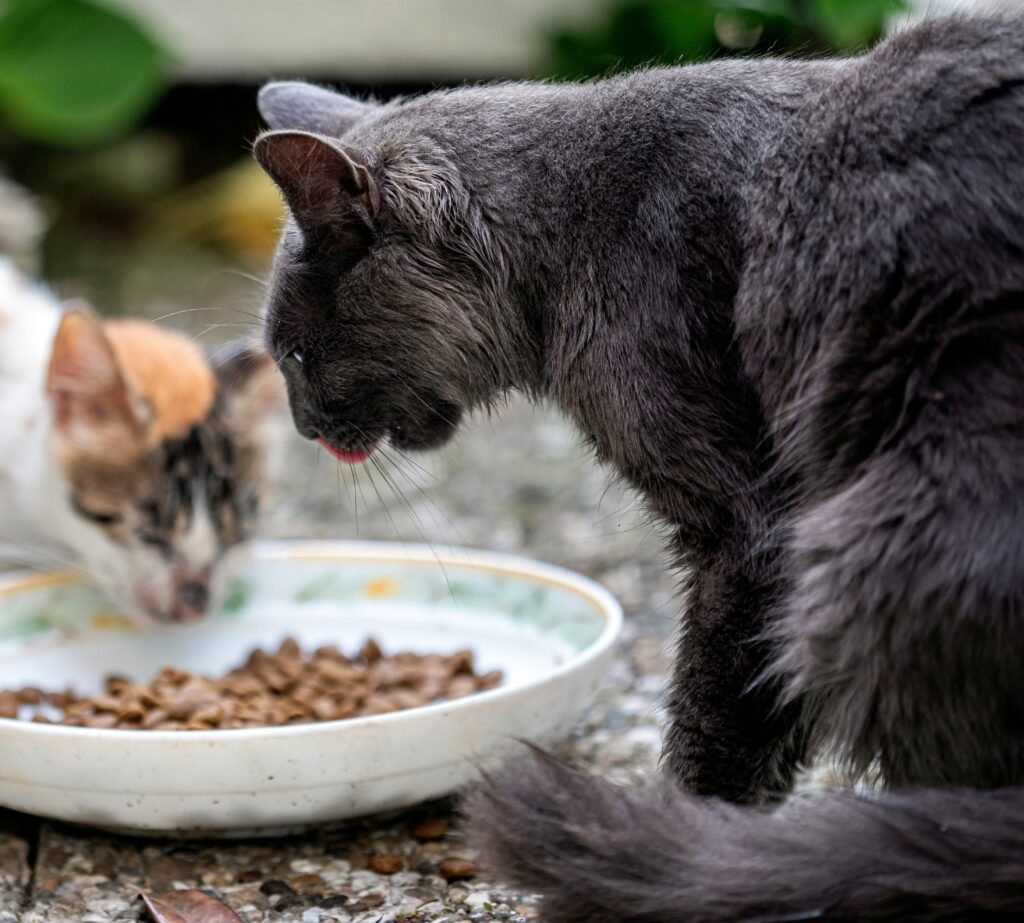
Feeding your cat at consistent times with proper portions becomes challenging when you’re stuck at work late, traveling, or managing multiple pets with different dietary needs. A smart wet food feeder cats automatic system eliminates these feeding frustrations by delivering scheduled portions while keeping wet food fresh throughout the day. Unlike basic automatic feeders that work on simple timers, smart wet food feeders offer app control, portion monitoring, and advanced features like RFID pet identification and video monitoring.
The key difference lies in precision and adaptability. Traditional feeders dispense food at set times regardless of your cat’s actual eating patterns, while smart automatic feeders learn your pet’s habits and adjust accordingly. This technology becomes especially valuable for cats requiring medication mixed with food, multiple cats needing different portions, or senior cats who benefit from smaller, more frequent meals.
What Makes a Smart Wet Food Feeder Worth Buying?
Smart wet food feeders distinguish themselves from basic automatic models through several key technologies. App connectivity allows you to monitor feeding times, adjust portions remotely, and receive notifications when your cat has eaten. This proves invaluable for tracking eating habits or ensuring your pet maintains regular feeding schedules when you’re away.
Portion control accuracy represents another critical feature. Quality smart feeders measure wet food portions in precise amounts, preventing overfeeding while ensuring your cat receives adequate nutrition. Many models include built-in scales or volumetric measurements that account for different wet food textures and densities.
Freshness preservation technology keeps wet food safe for consumption throughout the day. This typically involves sealed compartments, ice packs, or temperature control systems that prevent spoilage. Some advanced models include sensors that detect when food has been sitting too long and alert you through the app.
Multi-pet compatibility becomes essential in households with multiple cats. RFID technology or facial recognition ensures each cat receives their designated portion and prevents food stealing. This feature proves especially important when pets have different dietary requirements or feeding schedules.
Best Smart Wet Food Feeders for Cats in 2026
1. Polar Smart Wet Food Feeder — Best Overall
The Polar Smart Wet Food Feeder delivers comprehensive smart feeding functionality at a reasonable price point. This feeder combines reliable scheduling technology with precise portion control, making it suitable for both single and multi-cat households. The accompanying app provides detailed feeding logs and allows remote schedule adjustments from anywhere.

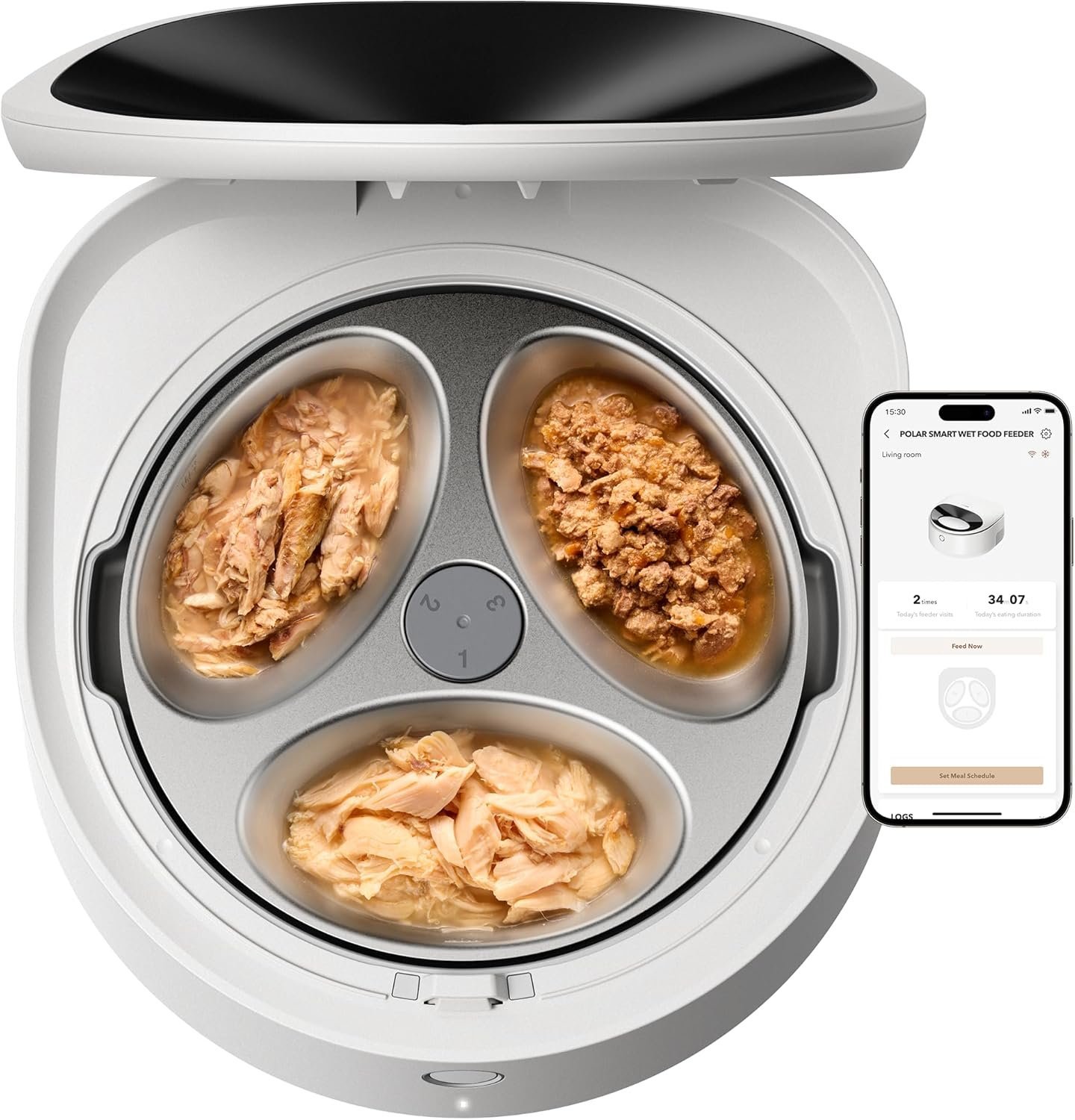
What sets the Polar apart is its balance of essential features without unnecessary complexity. The feeder accommodates various wet food textures, from pâté to chunky varieties, while maintaining consistent portion sizes. The sealed feeding compartments keep food fresh during extended periods, addressing concerns about wet food spoilage.
The setup process remains straightforward, requiring only WiFi connection and app installation. Battery backup ensures feeding continues during power outages, while dishwasher-safe components simplify daily cleaning. This feeder offers solid value for households seeking reliable automated wet food feeding without premium features they may not need.
2. One RFID Smart Feeder — Best for Multiple Cats
Multi-cat households face unique feeding challenges that the One RFID Smart Feeder addresses through advanced pet identification technology. Each cat receives a lightweight RFID collar tag that triggers their personalized feeding program when they approach the bowl. This prevents faster eaters from stealing slower cats’ portions while ensuring each pet receives their prescribed diet.
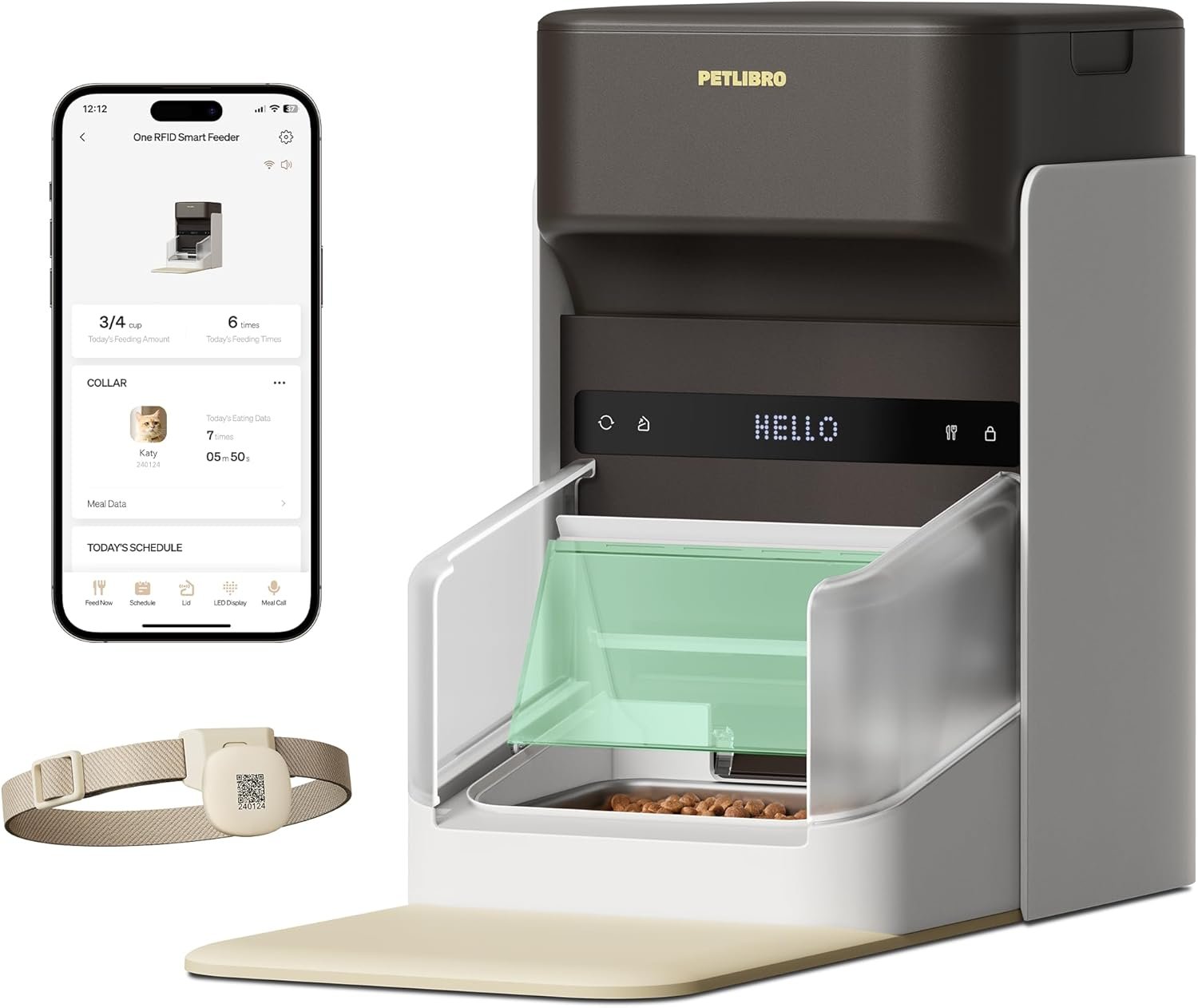
The RFID system works reliably within a short range, opening the designated feeding compartment only when the correct cat approaches. This precision proves especially valuable when managing cats with different dietary restrictions, medication schedules, or weight management programs. The app tracks each cat’s eating patterns individually, providing insights into appetite changes or health concerns.
The One RFID represents a higher initial investment that pays dividends in multi-pet households. The feeder supports multiple RFID tags, accommodating larger cat families while maintaining individual feeding schedules. The system includes backup manual feeding options when RFID tags are lost or batteries die.
3. Granary Smart Camera Feeder — Best with Video Monitoring
For cat owners who want visual confirmation of their pet’s eating habits, the Granary Smart Camera Feeder combines automatic feeding with HD video monitoring. The built-in camera provides live streaming through the companion app, allowing you to watch your cat eat and ensure they’re comfortable with the automated feeding process.
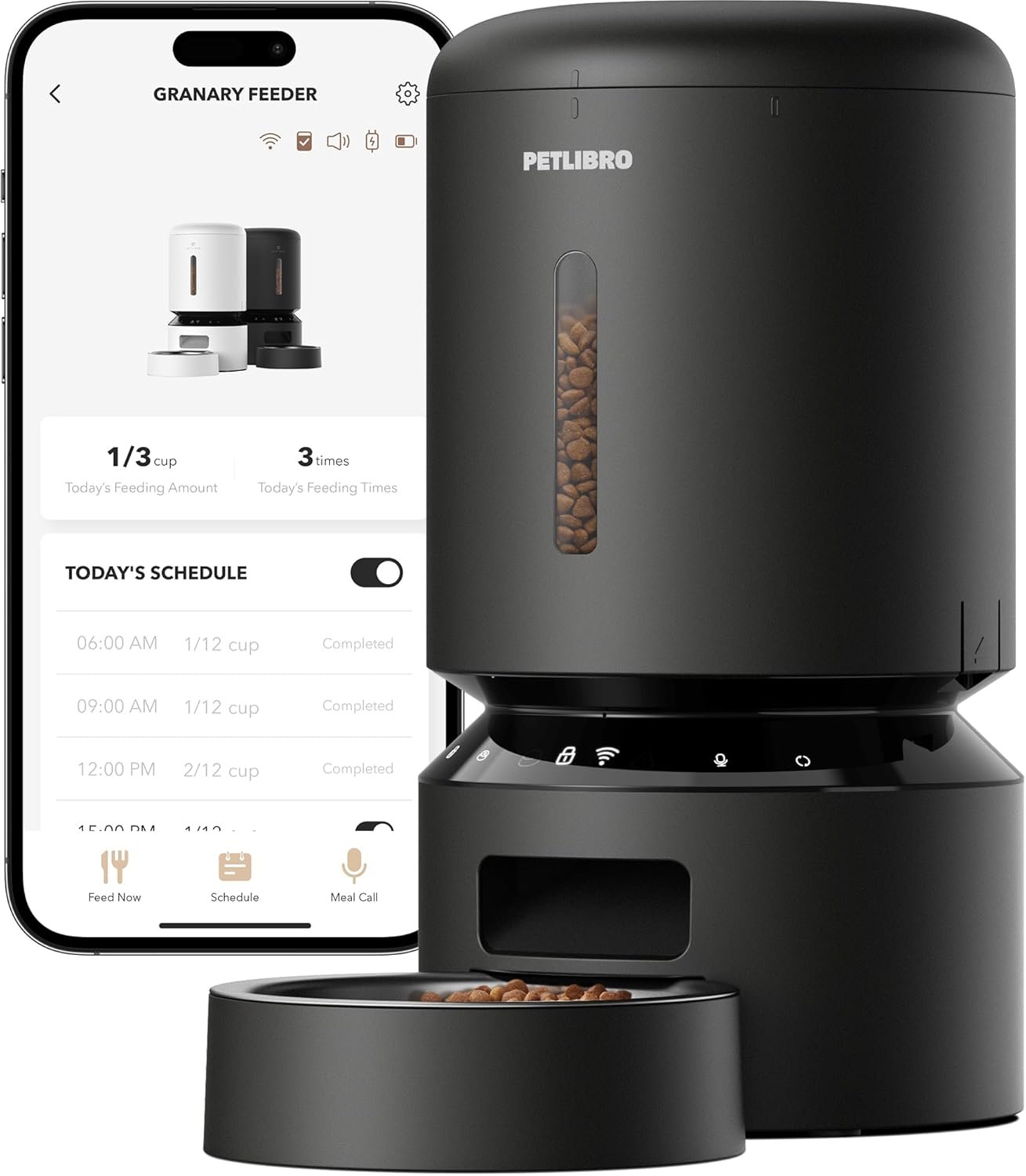
The camera features night vision capabilities for monitoring evening and early morning feeding sessions. Two-way audio allows you to comfort anxious cats or call them to their meals remotely. Motion detection alerts notify you when your cat approaches the feeder, even if it’s not scheduled feeding time, which can indicate hunger or stress.
Video storage options include cloud recording for reviewing feeding patterns over time. This visual data proves valuable when consulting with veterinarians about eating behaviors or appetite changes. The camera adds peace of mind for travel situations, letting you verify your cat is eating normally while you’re away.
4. Air Automatic Feeder — Best Budget Option
The Air Automatic Feeder provides essential smart feeding functionality without premium features that drive up costs. This straightforward feeder focuses on reliable scheduling and portion control while maintaining app connectivity for remote management. It’s ideal for single-cat households or owners new to automated feeding who want to test the concept affordably.
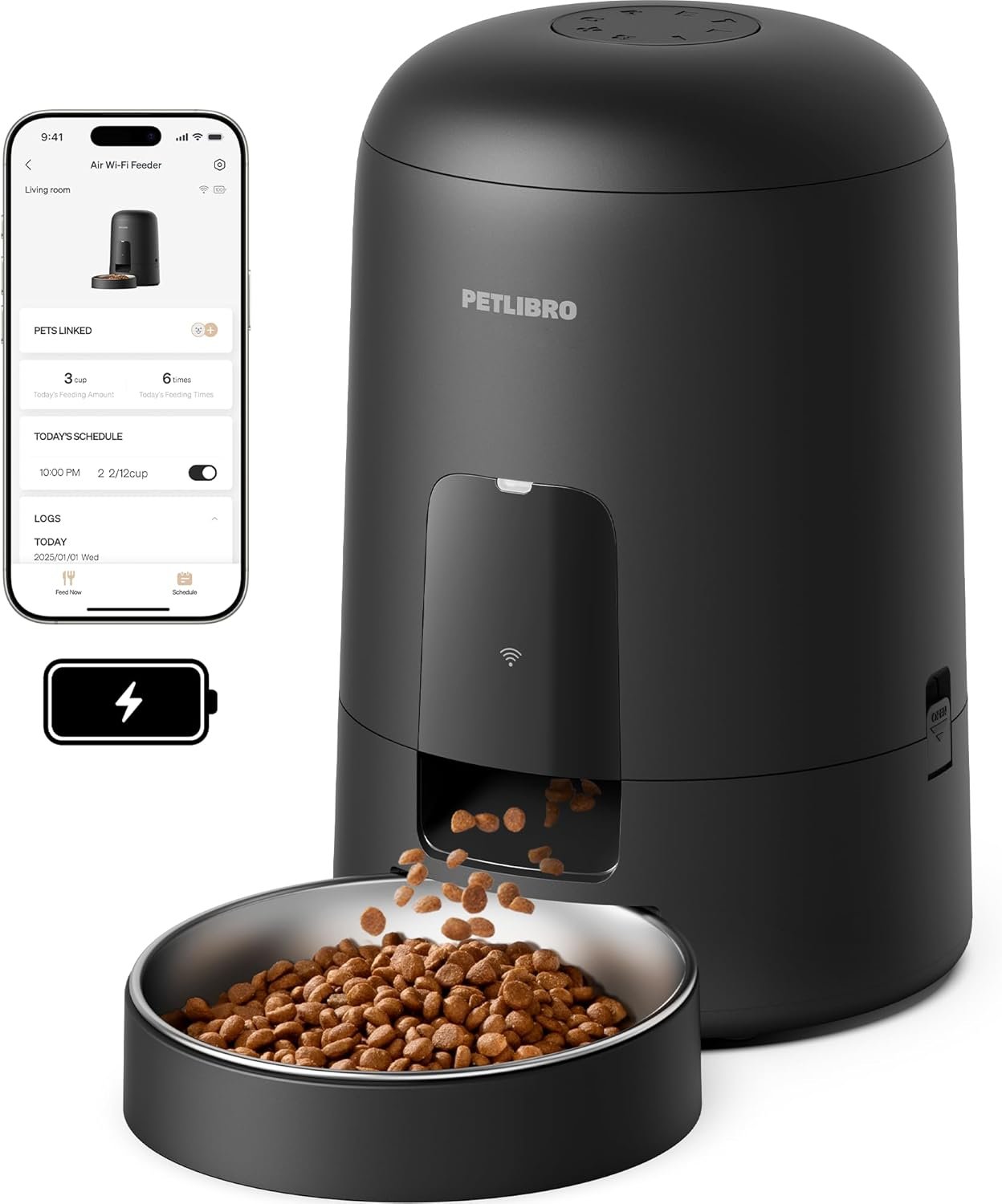
Despite its budget positioning, the Air doesn’t compromise on core functionality. The feeder maintains consistent portion sizes and includes basic freshness preservation through sealed compartments. The app interface remains intuitive, offering scheduling flexibility and feeding notifications without overwhelming complexity.
The Air represents exceptional value for cost-conscious cat owners. While it lacks advanced features like RFID identification or video monitoring, it delivers reliable automated wet food feeding that many households find perfectly adequate. The simple design also means fewer potential failure points and easier maintenance routines.
5. Granary Smart Camera Feeder Dual Bowl — Best for Two Cats
Households with exactly two cats benefit from the Granary Smart Camera Feeder Dual Bowl’s specialized design. Rather than using RFID technology, this feeder provides two independent feeding compartments that can be programmed with different schedules and portions. The integrated camera monitors both cats simultaneously, providing comprehensive feeding oversight.
Each bowl operates independently, allowing for staggered feeding times or different portion sizes based on each cat’s needs. This proves particularly useful when one cat requires medication mixed with food or when managing different dietary requirements. The camera positioning captures both feeding areas in a single frame, simplifying monitoring duties.
The dual-bowl design eliminates territorial feeding disputes while maintaining individual feeding schedules. This design costs less than purchasing two separate single feeders while providing coordinated feeding management. The system works best when cats have established feeding spots and don’t typically steal each other’s food.
6. Dockstream 2 Smart Fountain — Best Water Integration
While primarily a water fountain, the Dockstream 2 Smart Fountain complements smart feeding systems by providing automated hydration monitoring. The fountain tracks water consumption patterns and sends alerts when intake decreases, which often indicates illness or stress. This data pairs valuable with feeding information to provide complete nutritional oversight.
The fountain’s smart sensors detect water level, filter life, and pump function through the companion app. This connectivity allows you to monitor your cat’s hydration alongside their eating habits, creating a comprehensive picture of their daily nutritional intake. The multi-level drinking areas accommodate cats of different sizes and drinking preferences.
The Dockstream 2 provides excellent value when paired with any smart feeding system. The combination of automated feeding and hydration monitoring offers complete nutritional management that many veterinarians recommend for senior cats or those with health conditions requiring close dietary supervision.
Smart Feeder Comparison Table
| Product | Key Features | Best For | App Required | Multi-Pet Support |
|---|---|---|---|---|
| Polar Smart Wet Food Feeder | Smart scheduling, portion control, freshness preservation | Overall best value | Yes | Basic |
| One RFID Smart Feeder | RFID identification, individual portions, multiple pet capacity | Multiple cats | Yes | Advanced RFID |
| Granary Smart Camera Feeder | HD camera, night vision, two-way audio | Visual monitoring | Yes | Single cat |
| Air Automatic Feeder | Timer control, basic scheduling, simple setup | Budget conscious | Yes | No |
| Granary Smart Camera Feeder Dual Bowl | Two bowls, independent control, camera monitoring | Exactly two cats | Yes | Dual bowl only |
| Dockstream 2 Smart Fountain | Water tracking, health monitoring, filtration | Hydration complement | Yes | Yes |
What to Consider Before Buying
Food Type Compatibility
Not all smart feeders handle every wet food texture equally well. Pâté-style foods typically work best with automated systems because they maintain consistent texture and don’t clog dispensing mechanisms. Chunky varieties or foods with large pieces may jam certain feeders or dispense unevenly, leading to inconsistent portions.
Consider your cat’s preferred wet food brands and textures when selecting a feeder. Some models include texture settings that adjust dispensing mechanisms for different food types. Others work exclusively with specific container sizes or food consistencies. Testing compatibility with your current food brand prevents disappointment after purchase.
Container compatibility also matters for convenience and cost management. Feeders that work with standard wet food cans or pouches eliminate the need to transfer food into proprietary containers. This saves time during daily loading and reduces the risk of spills or contamination during food transfer.
Power and Connectivity
Smart feeders require reliable WiFi connections to function properly, which can create challenges in homes with weak wireless signals or frequent internet outages. Most models include basic offline functionality, but advanced features like remote scheduling and monitoring become unavailable without internet access.
Battery backup systems vary significantly between models. Some feeders include substantial backup batteries that maintain full functionality for days during power outages, while others offer only basic feeding capabilities. Consider your area’s power reliability and choose accordingly, especially if you travel frequently and can’t address power issues immediately.
App dependencies can create long-term concerns about device longevity. Companies occasionally discontinue app support for older models, rendering smart features useless even when the hardware remains functional. Research the manufacturer’s track record for supporting older products and consider feeders that offer some functionality without app connectivity.
Cleaning and Maintenance
Daily cleaning requirements vary dramatically between smart feeder models. Feeders with complex dispensing mechanisms or multiple food compartments require more thorough cleaning to prevent bacterial growth and food spoilage. Simple designs with removable, dishwasher-safe components simplify maintenance routines.
Replacement part availability affects long-term costs and usability. Some feeders require proprietary food containers, filters, or mechanical components that become expensive over time. Others use standard parts or include long-lasting components that rarely need replacement. Factor these ongoing costs into your budget calculations.
Deep cleaning frequency depends on your cat’s eating habits and the feeder’s design. Messy eaters or cats who leave food remnants require more frequent thorough cleaning to prevent odors and bacteria buildup. Feeders with sealed systems and easy-access cleaning points reduce the time and effort needed for maintenance.
Smart Feeding Setup Tips
Introducing smart feeders gradually prevents stress and ensures successful adoption. Start by placing the unpowered feeder near your cat’s regular feeding area for several days, allowing them to investigate and become comfortable with its presence. Add familiar scents by rubbing the feeder with a cloth that carries your cat’s scent.
Begin automated feeding with one meal per day while maintaining manual feeding for other meals. This allows your cat to associate the feeder with positive experiences without complete dependency. Gradually increase automated meals as your cat shows comfort and reliability in approaching the device at feeding times.
Scheduling flexibility becomes important during the adjustment period. Start with your cat’s existing feeding times rather than trying to establish new schedules immediately. Most cats adapt more easily when smart feeders complement their established routines rather than disrupting them completely.
The key to successful smart feeder adoption is patience during the transition period. Most cats need 1-2 weeks to fully trust automated feeding systems.
Monitor your cat’s eating patterns closely during the first month of use. Look for signs of stress, changes in appetite, or attempts to access the feeder outside of scheduled times. These behaviors often indicate scheduling adjustments or portion modifications are needed.
Frequently Asked Questions
Do smart wet food feeders keep food fresh all day?
Most quality smart feeders preserve wet food freshness through sealed compartments and temperature control features. However, wet food naturally spoils faster than dry food, so feeders work best for same-day consumption rather than multi-day storage. Some models include ice packs or cooling elements that extend freshness periods.
Can automatic feeders work with chunky wet cat food?
Chunky wet foods present challenges for many automatic feeders due to uneven textures and large pieces that can jam dispensing mechanisms. Pâté and smooth textures work most reliably with automated systems. If your cat prefers chunky food, look for feeders specifically designed to handle varied textures or consider mixing chunky food with smooth varieties.
What happens if the WiFi goes down with smart feeders?
Most smart feeders include offline functionality that maintains basic feeding schedules when internet connectivity fails. However, you lose remote monitoring, schedule adjustments, and notification features until connectivity returns. Battery backup systems ensure feeding continues during power outages, but duration varies by model.
How do RFID feeders prevent food stealing between cats?
RFID feeders use collar-mounted tags that trigger food dispensing only when the correct cat approaches within range. The feeding compartment remains locked for other cats, physically preventing access to food assigned to different pets. This system works reliably as long as cats wear their RFID collars consistently.
Are smart feeders worth it for single cat households?
Single cat households benefit from smart feeders primarily through schedule consistency and monitoring capabilities. If you have regular work hours and feeding routines, a basic automatic feeder might suffice. Smart feeders add value when you travel frequently, work irregular hours, or want detailed tracking of your cat’s eating habits for health monitoring.
Final Verdict
The Polar Smart Wet Food Feeder represents the best overall choice for most cat owners seeking reliable smart wet food feeder cats automatic functionality in 2026. Its combination of essential features, reasonable pricing, and proven reliability makes it suitable for both first-time automation users and experienced smart pet device owners.
For multi-cat households, the One RFID Smart Feeder’s advanced identification technology justifies its higher cost through individual feeding management that prevents dietary mix-ups and food stealing. Single-cat owners who prioritize visual monitoring should consider the Granary Smart Camera Feeder for its comprehensive video capabilities.
Budget-conscious buyers will find the Air Automatic Feeder provides solid core functionality without premium features they may not need. The key is matching feeder capabilities to your specific household requirements rather than paying for unnecessary complexity.
Smart wet food feeding technology has matured significantly, offering reliable solutions for consistent pet nutrition management. The investment in automated feeding pays dividends through reduced daily feeding stress, better portion control, and comprehensive eating pattern monitoring that supports long-term cat health and wellbeing.