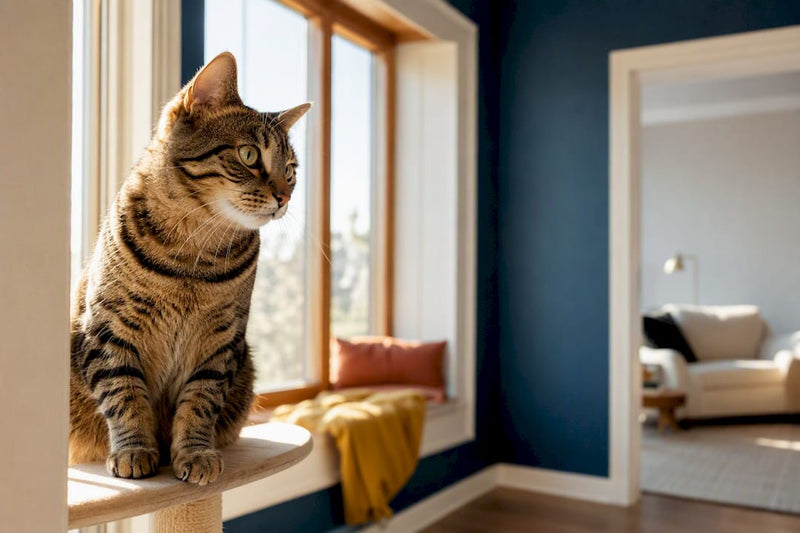
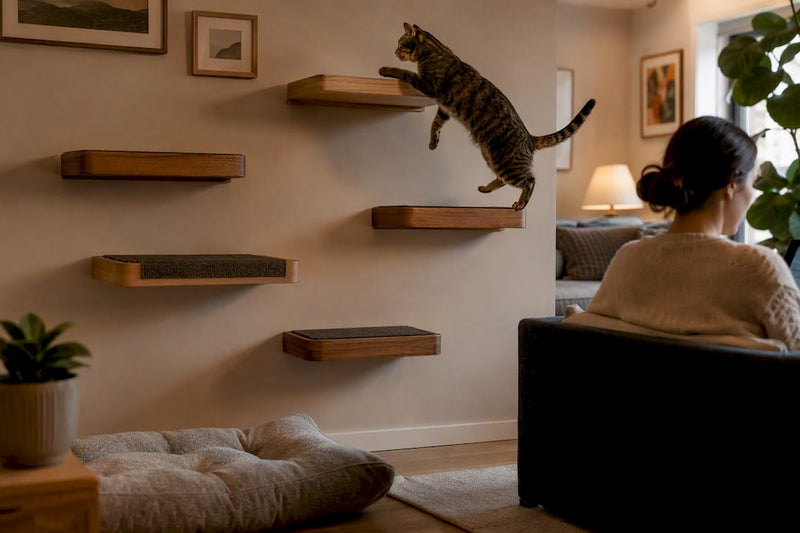
The best cat climbing wall combines floating shelves, a short bridge or two, and at least one covered cubby, spaced 12 to 18 inches apart vertically so your cat can move up and down without straining. Skip the guesswork and pick from ideas that already work in real homes.
Quick ideas you can start this weekend:
- A three-shelf floating staircase near a window
- A sisal-wrapped ramp leading to a favorite perch
- A cubby mounted above a doorway for quiet cats
- A corner bridge connecting two existing shelves
- Honeycomb modules staggered across a blank wall
- An over-door landing platform for small rooms
- A single wide shelf as a low-commitment starting point
- A carpeted runway above a hallway
Pro Tip: Anchor into wall studs whenever you can. If you rent, use command-strip brackets or a freestanding tower instead of drilling.
Key Takeaways
A safe, well-used cat climbing wall depends on 12 to 18 inch vertical spacing, stud-mounted anchors, and at least one covered resting spot.
| Point | Details |
|---|---|
| Follow the spacing rule | Keep shelves 12 to 18 inches apart vertically and 12 to 16 inches apart horizontally. |
| Mount into studs when possible | Use a stud finder for permanent installs, or removable anchors and freestanding towers for renters. |
| Extend the top landing | Add a landing shelf one cat length above the highest regular shelf for safe descents. |
| Mix materials by purpose | Use sisal on ramps and edges for grip, plywood over MDF for load-bearing shelves. |
| Buy pieces that skip the build | The Apawtment Cat House, Torre Cat Tower, and Perla Cat Cave map directly to cubby, tower, and cave ideas without any drilling. |
Table of Contents
- 10 Cat Climbing Wall Ideas Worth Copying
- What Materials Make a Cat Climbing Wall Safe?
- How Far Apart Should Cat Shelves Be Spaced?
- How Do You Build a Basic Cat Climbing Wall?
- What About Bridges, Cubbies, and Runways?
- How Do You Get a Cat to Actually Use the Wall?
- How Do You Maintain a Cat Climbing Wall?
- Designing for Your Cat’s Personality and Energy Level
- Ready-Made Pieces That Skip the Sawdust
- Sources
- FAQ
10 Cat Climbing Wall Ideas Worth Copying
Here are ten cat wall ideas that show up again and again in homes that actually get used by their cats, not just admired by guests.
- Floating shelf staircase. Three or four shelves stepped diagonally up a wall. Works well in apartments and small rooms where floor space is tight.
- Sisal-wrapped ramp. A slanted board covered in sisal rope gives claws something to grip on the way up. Good for older or heavier cats who dislike jumping.
- Above-door runway. A narrow platform mounted over a doorframe uses dead space most owners ignore, similar to the low-cost setup described in this inexpensive climbing wall hack.
- Corner bridge. A short plank connecting two shelves at an angle, ideal for multi-cat households that need parallel paths so cats don’t have to pass each other.
- Honeycomb module cluster. Hexagon boxes staggered across a wall, popular in modern layout roundups for their gallery-wall look.
- Covered wall cubby. A boxed-in perch for shy or senior cats who want height without being seen.
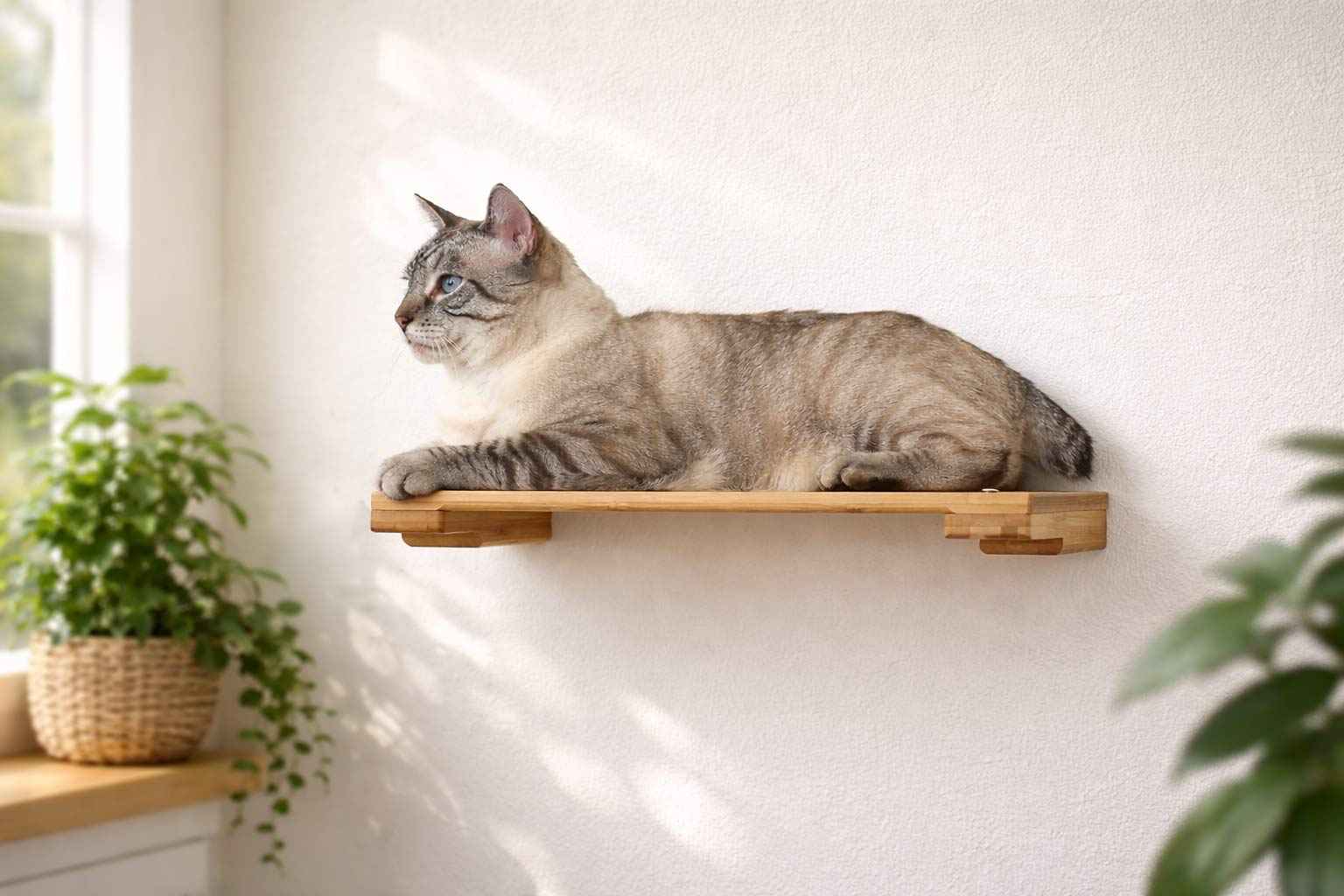
- Window-adjacent perch. A single wide shelf placed at windowsill height. Best low-effort entry point for a first-time build.
- Carpeted hallway highway. A long shelf run above a hallway connects two rooms for cats who patrol.
- Freestanding ladder to wall shelf. A leaning ladder shelf that needs no drilling at all, great for renters.
- Multi-level lounge with landing. A wide top shelf paired with a smaller landing platform below it, so cats descend in stages instead of jumping down.
Photograph each build from a low, cat’s-eye angle rather than straight on. That angle sells the height and depth better than any overhead shot.
What Materials Make a Cat Climbing Wall Safe?
Pick materials before you pick a design. What holds screws and what holds claws are two different problems.
- Plywood (3/4 inch works well for shelves): holds screws firmly, doesn’t warp easily
- MDF: cheaper and smoother, but crumbles around screw holes over time
- Sisal rope or sisal fabric: best traction for claws, wears in visibly over months
- Carpet: soft underfoot, but sheds fibers and holds odor longer than sisal
- L-brackets, wood screws, a stud finder, and a level round out the essential hardware, per the build list in this DIY cat climbing wall guide
Plywood beats MDF for anything load-bearing. Sisal beats carpet for a scratching surface but costs more to replace. If you rent, skip drilling entirely with a freestanding climbing shelf tower, a door-top tension mount, or heavy-duty command strips rated for at least 10 pounds.
Pro Tip: Buy a small offcut of plywood and test your bracket and anchor combination on it before mounting anything at height.
How Far Apart Should Cat Shelves Be Spaced?
Spacing decides whether your wall gets used daily or ignored after week one.
- Keep vertical gaps between 12 and 18 inches, per the spacing range recommended in this build guide.
- Keep horizontal gaps between 12 and 16 inches so cats can step or make a short hop rather than a long leap.
- Extend the top shelf a full cat length above the nearest landing spot, a trick that improves safe descent rather than forcing a drop.
- Mount every load-bearing shelf into a stud, or use anchors rated for at least double your cat’s weight.
- Keep shelves at least 18 inches from windows with blinds cords, curtain rods, or breakable décor.
- Test each shelf with your full body weight leaning on it before your cat ever steps on it
- Avoid placing shelves directly above hard flooring without a rug or mat below
Pro Tip: Tighten the spacing toward 12 inches for senior cats, kittens, or larger breeds. Wider gaps suit young, agile cats who like a challenge.
How Do You Build a Basic Cat Climbing Wall?
A basic three-shelf floating wall takes most owners a single afternoon and may cost a modest amount depending on wood quality and hardware.
- Measure your wall and mark stud locations with a stud finder.
- Sketch your shelf spacing on the wall in pencil, following the 12 to 18 inch vertical rule.
- Cut plywood into shelf boards, roughly 10 to 14 inches deep.
- Wrap the front edge of one or two shelves in sisal rope for traction.
- Attach L-brackets to the underside of each shelf.
- Drill into studs and mount the lowest shelf first.
- Add each subsequent shelf, checking level as you go.
- Push down hard on every shelf to test for wobble before letting your cat near it.
- Add a final top landing extended one cat length above the highest regular shelf.
Tools checklist: drill, stud finder, level, tape measure, saw (or precut boards), sisal rope or carpet remnant, wood screws, L-brackets.
Timeline: 3 to 5 hours for a basic three-shelf wall, spread across a single weekend if you’re cutting your own wood.
For renters, swap step 6 for one of these:
- Mount into a freestanding ladder shelf unit that leans against the wall
- Use heavy-duty removable anchors rated for your shelf’s loaded weight
- Choose a door-top tension mount that clamps over a frame with no drilling at all
Pro Tip: Buy your hardware rated for at least twice your cat’s weight. A 10-pound cat landing from a jump generates far more force than its static weight.
What About Bridges, Cubbies, and Runways?
Once the basic shelves are up, bridges and cubbies turn a climbing wall into a full playground.
- Bridges: keep spans under 24 inches unsupported, or add a center support bracket for anything longer
- Cubbies: mount with the opening facing away from foot traffic so shy cats feel enclosed, not exposed
- Honeycomb modules: stagger them rather than lining them up in a grid, which reads better visually and gives cats more route choices
- Above-door runways: brace with a bracket on each end plus a center support if the doorway is wider than 32 inches
For multi-cat households, build at least two separate routes up the wall so cats don’t have to pass nose to nose on a single narrow bridge. Pair sisal on ramps and high-traffic edges with smoother wood or carpet on resting shelves, a combination visible in modular commercial climbing sets that mix sisal-covered ramps with padded cuddle spaces.
Pro Tip: Add a redundant low shelf near any bridge so a nervous cat has a bailout option instead of freezing mid-crossing.
How Do You Get a Cat to Actually Use the Wall?
Cats don’t automatically trust new heights. Bait the route before you expect them to climb it.
- Rub a small amount of catnip or a treat on the lowest shelf first
- Place a favorite toy on the second shelf, not the top one
- Let your cat sniff and paw at the structure with all four feet on the ground before encouraging a jump
- Start with one shelf they can reach easily and reward exploration
- Add the next shelf only once they’re using the first one daily
- Introduce the bridge or gap last, after both connecting shelves feel familiar
- Add a scratching panel, a hanging feather toy, or a scent-marked cubby to keep the appeal fresh
How Do You Maintain a Cat Climbing Wall?
A climbing wall needs the same kind of upkeep as any piece of furniture that takes daily impact.
- Check every anchor and bracket monthly for looseness, tightening screws as needed
- Inspect sisal for fraying and carpet for matting or odor buildup every few weeks
- Wipe down wood shelves with a pet-safe cleaner to control dander and litter tracking
Troubleshooting: a wobbly shelf usually means a stripped screw hole (fix with a slightly larger screw or a wall anchor), while persistent odor on carpet usually means it’s time to replace that section entirely rather than just cleaning it.
Pro tip: run through a quick pre-use safety check before your cat’s first climb: press down on every shelf, tug each bracket, and confirm no gap exceeds the 12 to 18 inch spacing range.
Designing for Your Cat’s Personality and Energy Level
Not every cat wants the same wall. A young, athletic cat that sprints laps around the living room needs wider gaps, longer runways, and multiple routes to burn energy. Tighter spacing and more resting shelves suit an older or heavier cat better, since shorter hops put less strain on joints.
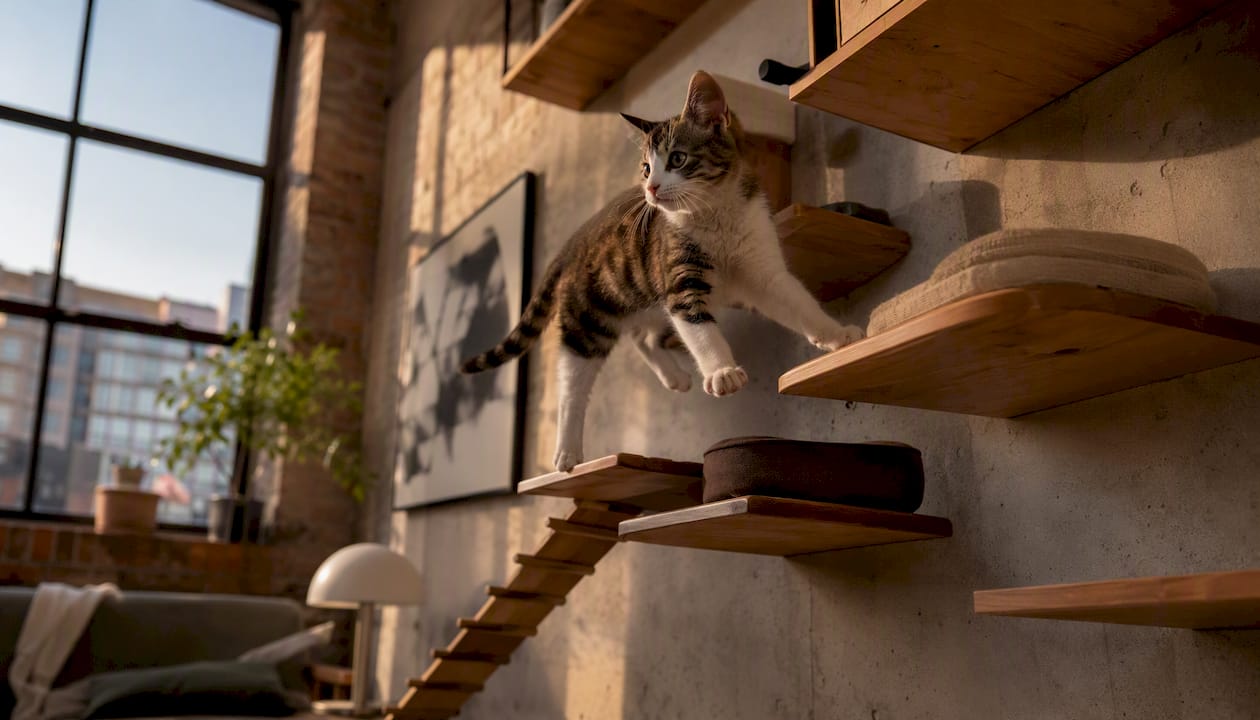
Shy or anxious cats do best with more covered cubbies than open shelves. Give them a route that lets them climb without being seen from the main part of the room, and place the first cubby low enough that it doesn’t feel like a leap of faith. Bold, curious cats tend to gravitate toward the highest perch in the house regardless of what you intend, so plan your tallest shelf as the true visual and physical peak of the layout.
In multi-cat homes, personality clashes matter as much as space. A dominant cat may claim the top shelf permanently, so build at least one separate high perch elsewhere in the room for a second cat to retreat to. Kittens benefit from smaller vertical gaps that get replaced or extended as they grow into adult jumping range. Watching which shelves your cat already prefers, whether that’s a sunny windowsill or a shadowy corner, tells you more about where to expand the wall than any general design rule ever will.
Why Vertical Space Changes How Cats Live Indoors
TheMeowPicks Team sees vertical space as the single most underused resource in most homes. Cats read height as safety, not decoration. For a first layout, we’d start with one wide shelf, one covered cubby, and a short bridge. That trio covers climbing, resting, and hiding, the three things every cat actually asks for.
Ready-Made Pieces That Skip the Sawdust
Not every household has a free Saturday or a drill. The Meow Picks carries designer wall pieces built by independent makers that map directly onto the DIY ideas above, no measuring twice or patching mistakes.
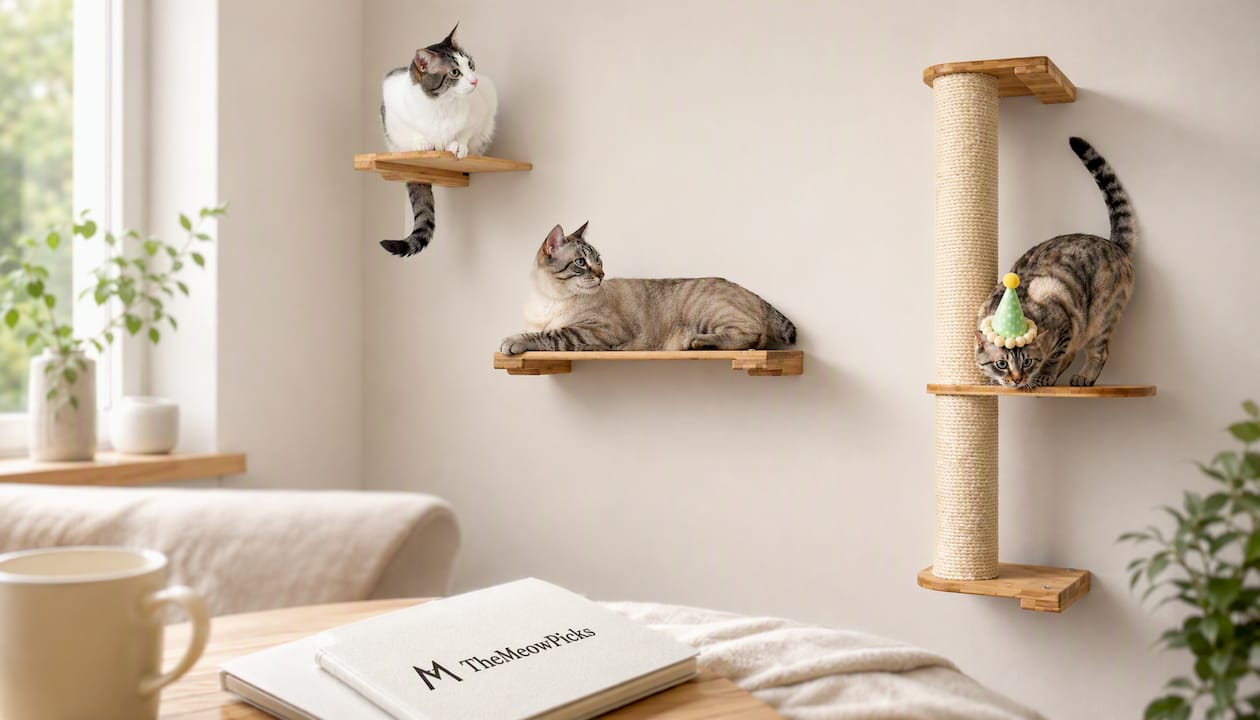
- The Apawtment Cat House covers the covered-cubby idea for shy cats without any mounting into drywall
- The Torre Cat Tower adds freestanding height next to your wall shelves, a renter-friendly way to extend a route with zero drilling
- The Perla Cat Cave gives you a quiet resting spot to place at the end of a bridge or runway
- The three-tier wall maze mirrors the multi-level floating lounge idea in one preassembled unit
- A wall-mounted perch works as a starter shelf if you want to test the concept before committing to a full build
Buying a finished piece skips the trial-and-error of sourcing sisal, cutting boards to size, and hoping your bracket spacing was right the first time. Every order also puts a portion toward cat rescue groups, so the purchase does double duty. Browse the wall shelf collection and pick one piece to start your layout this week.
Sources
- DIY Cat Climbing Wall: How to Build One and Tips - Archiecat
- Up the Wall Climber - Cats Without Jobs
- An Inexpensive Hack for a Cat Climbing Wall - IKEA Hackers
- 16 DIY Cat Wall Ideas to Transform Your Space and Pamper Your Pet - Animalsman
FAQ
How Can I Make a DIY Wall Climber for My Cat?
Start with a single plywood shelf mounted into a wall stud, wrap the leading edge in sisal for grip, and add more shelves spaced 12 to 18 inches apart as your cat gets comfortable.
Do Cats Like Climbing Walls?
Most cats use vertical space readily once it’s introduced gradually with treats or toys, since height gives them a sense of security and a better vantage point over their territory.
What Are Some Good Climbing Structures for Cats?
Floating shelf staircases, sisal-wrapped ramps, covered cubbies, and short bridges connecting existing furniture all work well, and ready-made options like the Torre Cat Tower add height without any building.
What Material Can Cats Climb?
Sisal rope and sisal fabric give the best claw traction, plywood provides a sturdy shelf base, and carpet works for softer landing spots but wears faster than sisal.
How Much Does a DIY Cat Climbing Wall Cost?
A basic three-shelf setup typically runs a modest amount depending on wood quality, brackets, and whether you add sisal wrapping to every shelf or just the high-traffic edges.
Recommended
- Cat Wall Shelves for Large Cats: Safe, Sturdy Picks – The Meow Picks
- Best Cat Tree for Apartment Living: Space-Smart Picks – The Meow Picks
- The High-End Cat Tree: A Guide to Feline Architecture and Modern Desig – The Meow Picks
- Cool Cat Trees: Where High-End Design Meets Feline Enrichment – The Meow Picks