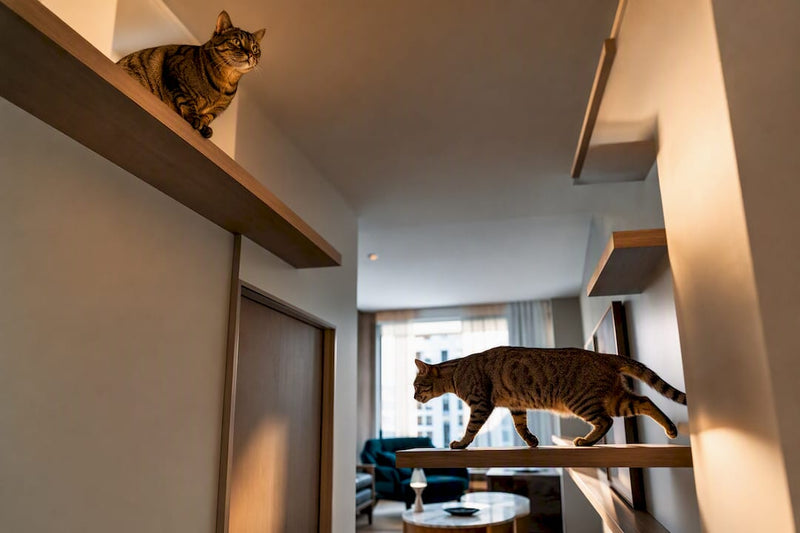
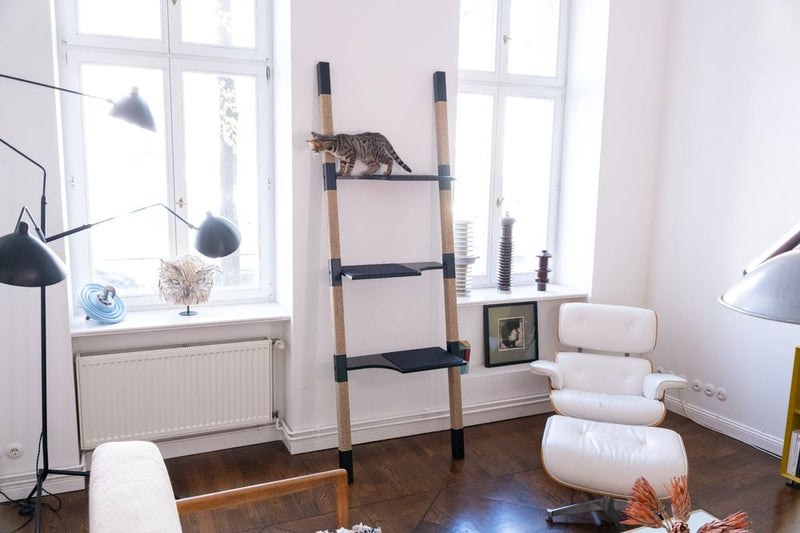
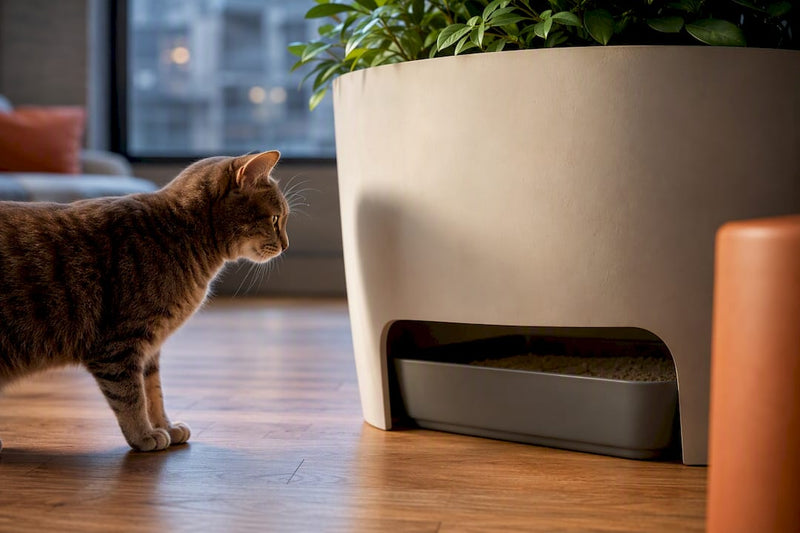
Yes, a well-designed litter box cabinet can be safe, provided it offers ventilation, easy cleaning access, adequate interior space, and anti-tip or childproof features. The main risks worth avoiding are trapped ammonia odor, entrapment around mechanical parts, and tipping. Before you buy, verify vents on at least two sides, confirm the tray pulls out without a fight, and plan to anchor the piece to a wall.
TL;DR:
- Ventilation should include vents on at least two sides to ensure proper airflow and prevent ammonia odor buildup in enclosed cabinets.
- Automatic litter boxes inside cabinets require grounding, surge protection, and child-proof locks to minimize mechanical hazards like entrapment or electrical risks.
- The interior space must accommodate a litter box roughly 1.5 times your cat’s length with extra room for turning and easy scoop access, especially in multi-cat households.
- Cabinets must be anchored to wall studs or have stable bases to prevent tip-over risks when cats jump or toddlers pull on doors.
- Choose non-toxic, pet-safe finishes and avoid unsealed particleboard to prevent damage and odor issues while ensuring the enclosure is safe for repeated contact.
Table of Contents
- What Safety Features Make a Litter Box Cabinet Safe?
- How Do You Keep a Litter Box Cabinet Ventilated?
- What Entry Type and Size Fit Your Cat Best?
- Which Materials and Cleaning Features Prevent Damage and Odor?
- How Do You Anchor and Childproof a Litter Box Cabinet?
- When Should You Skip an Enclosed Cabinet Entirely?
- How The Meow Picks Chooses Cat Furniture That Meets This Checklist
- Do Cat Cabinets Cause Stress From Noise?
- Are the Paints and Finishes on Litter Cabinets Pet Safe?
- How Does Cabinet Design Affect a Cat’s Behavior?
- Our Take: Skip the Vendor Comparisons, Check the Fundamentals
- Ready to Shop Cabinets and Furniture That Meet the Checklist?
- Sources
- FAQ
What Safety Features Make a Litter Box Cabinet Safe?
Litter box cabinet safety comes down to two categories: mechanical hazards and structural hazards. Mechanical risk shows up mostly in cabinets built around self-cleaning or robotic litter boxes. Cheap enclosures sometimes wrap a motorized unit in a box with no clearance for the rake arm or waste drawer, which increases entrapment risk for a curious paw or tail. Safety guidance for automated litter box furniture calls out grounded outlets, surge protection, and child-proof locks as baseline requirements when you’re housing an electrified unit inside a wooden box.
Structural risk is simpler: does the cabinet fall over? A tall, narrow cabinet with a low base and a cat leaping in and out all day is a tipping hazard waiting for the wrong moment.
Look for these features before you buy:
- Pre-drilled anchor points or an included wall strap
- A base wider than the cabinet’s height, or a weighted bottom panel
- Delay timers and sensor redundancy on any automated unit inside
- Magnetic or keyed door catches if children live in the home
- Manufacturer load ratings printed in the manual, not just marketing copy
Pro Tip: Test the door latch with wet hands before you commit. If it’s fussy when your hands are dry, it will be worse mid cleaning, and you’ll start skipping days.
How Do You Keep a Litter Box Cabinet Ventilated?
Ammonia is heavier than the air around it, so it pools in low, enclosed spaces unless something moves it out. Furniture writeups consistently warn that a single rear cutout isn’t enough; real cross-flow needs vents or slats on at least two sides so air actually moves through instead of sitting stagnant in one corner.
Two approaches work:
- Passive: Slatted panels or laser-cut vents on opposing walls, positioned high and low to encourage airflow in both directions.
- Active: A small, low-noise fan paired with a carbon filter, useful in bathrooms or closets with no window and little natural airflow.
Active setups need upkeep. A carbon filter loses effectiveness over weeks, so plan on replacing it regularly depending on your litter and how many cats share the box.
None of this replaces scooping. Daily removal of waste, combined with a clumping litter that binds moisture, cuts down the odor load the ventilation has to handle in the first place. A sealed kitchen trash can nearby for waste, instead of an open bin, keeps the smell from creeping back into the room between scoops.
What Entry Type and Size Fit Your Cat Best?
Entry style changes who can use the cabinet comfortably. Top-entry designs help contain litter scatter but are hard on senior cats or anyone with joint pain, since climbing in requires a real jump. Front-entry cabinets are easiest for kittens and older cats, but they can let odor drift out more readily. Side-entry sits in between: less scat control than top-entry, easier access than a straight front hole.
Sizing matters more than entry style, honestly. A buying guide focused on enclosure fit recommends the litter pan measure roughly 1.5 times your cat’s length, nose to base of tail, with the cabinet itself larger still so there’s room to turn around without scraping the walls.
Before you buy, run through this:
- Measure your cat lying stretched out, then add a few inches for turning room.
- Choose a high-sided pan for the interior to contain urine spray, especially for male cats.
- Confirm the interior clearance fits a standard litter box plus a scoop resting beside it.
- If you have more than one cat, consider whether a single-entry cabinet creates a bottleneck at the door.
Multi-cat households often do better with an open pan or a second cabinet entirely. One entry point can become a chokepoint if a dominant cat decides to guard it.
Which Materials and Cleaning Features Prevent Damage and Odor?
Unsealed particleboard soaks up urine and holds odor permanently once it happens once. Look for a sealed, wipeable interior finish, or a cabinet with a removable waterproof liner that lifts out for hosing off. Exposed fabric panels inside the enclosure are a mistake almost every cat owner makes once and never repeats.
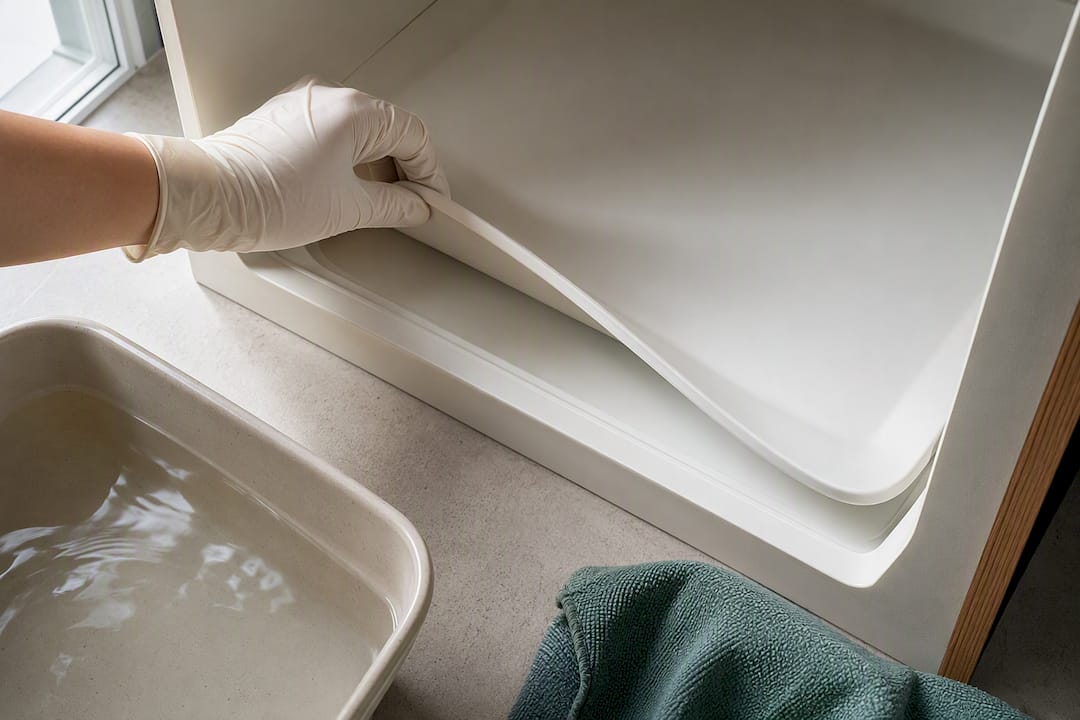
Access mechanics matter just as much as the finish. Wide swing doors, lift-off tops, and pull-out trays all reduce the friction of a daily chore, and less friction means less skipping. A cabinet you have to half-disassemble to scoop is a cabinet that gets cleaned less often, which defeats the purpose.
A short maintenance routine keeps the whole system working:
- Wipe interior surfaces weekly with a pet-safe cleaner, even if you don’t see visible mess
- Check filter condition monthly and replace on schedule
- Inspect corner joints and seams for swelling or staining, an early sign of water or urine damage
- Re-tighten hardware every couple of months, since vibration from daily use loosens screws over time
Pro Tip: Keep a spare filter and a bottle of enzymatic cleaner on hand. Running out mid-week is how odor problems start.
How Do You Anchor and Childproof a Litter Box Cabinet?
Tip-overs happen fast, usually when a cat jumps onto a closed lid or a toddler pulls open a door. A furniture manual for an enclosed litter cabinet specifically instructs wall anchoring and re-tightening fasteners after assembly to reduce tipping risk, and that advice holds for any tall or top-heavy cabinet design, not just one brand.
Work through these steps during setup (see tips on moving with cats to reduce their stress):
- Anchor the cabinet into wall studs using the included strap or an anti-tip bracket, never drywall alone.
- Avoid uneven floors, and keep the cabinet off the top of a washer, dryer, or space heater where vibration or heat can shift it.
- Load the pan, then simulate a hard cat jump onto the top or side to test for wobble before you consider it done.
- Recheck every fastener after two weeks of normal use, once vibration has had time to loosen anything.
Renters have options too. Anti-slip pads under the base, a weighted bottom insert, or a removable furniture strap all add stability without drilling into a wall you don’t own.
When Should You Skip an Enclosed Cabinet Entirely?
Sealed cabinets aren’t the right call for every home. Senior cats with mobility limits often struggle with tight entries and low visibility inside a dark box. Multi-cat households can see access conflicts flare up at a single doorway. And a closet with no window or vent will trap odor no matter how good the cabinet’s ventilation is, because the room around it has nowhere to send that air. Cat care guidance on enclosures notes that airflow, access, and cleaning ease all need monitoring after installation, since a cat’s actual behavior tells you more than the product description ever will.
If a cabinet seems wrong for your situation, simpler fixes often solve the odor problem without the downsides:
- An open, high-sided pan with a strict daily scooping habit
- A washable mat under the box to cut down on litter tracking
- A small fan aimed near the tray for localized airflow, without a full enclosure
If you do try a cabinet, keep the old open box running for at least a week during the switch. Watching whether your cat actually uses the new setup beats guessing.
How The Meow Picks Chooses Cat Furniture That Meets This Checklist
Some curated cat furniture collections are built around priorities like ventilation, access, and anchoring, not just looks. Enclosed pieces may be checked against those points before being offered for sale.
A few examples of how that plays out:
- The Cubo Sliding Door Cat Cabinet uses a sliding access panel designed for quick scooping without full disassembly.
- The H Cat Cabinet gives you a reference point for interior clearance if you’re comparing dimensions against your cat’s measurements.
- Our guide on litter boxes placed in closets walks through ventilation fixes for exactly the low-airflow spaces this article warns about.
Measure your space and your cat first. Then check the exact specs on each product page, since interior dimensions and hardware details vary by design and matter more than any general rule.
Do Cat Cabinets Cause Stress From Noise?
Cats have sharper hearing than people, and a hard plastic tray inside a wooden box can amplify scratching sounds into something that spooks a nervous cat right out of the habit of using the box. Litter type plays a bigger role here than most owners expect. Clumping clay litter is noisier against hard surfaces than a softer, plant-based litter, and that difference matters more inside a resonant wooden enclosure than in an open room.
A few adjustments cut down on startling noise:
- Line the tray area with a thin rubber mat before adding litter, which dampens scratching sound against the cabinet floor.
- Choose a lighter litter if your cat seems hesitant to dig near cabinet walls.
- Skip automated self-cleaning mechanisms for genuinely noise-sensitive cats. The motor cycle itself can be a deterrent, and a cat that avoids the box due to noise is worse off than one using a quiet open pan.
- Place the cabinet away from other loud appliances such as a washer or furnace, so ambient noise doesn’t compound with the cabinet’s own acoustics.
A cat that hesitates at the door of a new cabinet is often reacting to sound, not the enclosed space itself. Watch the first week closely, and switch litter before you assume the whole cabinet is a bad fit.
Are the Paints and Finishes on Litter Cabinets Pet Safe?
Cats spend close contact time with a litter cabinet daily, brushing against interior walls and sometimes chewing at edges out of curiosity or boredom. That makes finish choice a real safety question, not a cosmetic one.
Water-based, low-VOC paints and sealants are the safer standard for pet furniture, since they off-gas far less than solvent-based finishes and don’t carry the sharp chemical smell that can make a cat avoid the box entirely during the first weeks after purchase. A fresh coat of oil-based paint or varnish can also linger with fumes for days, right in the space your cat needs to use regularly.
Before buying or refinishing a litter cabinet:
- Ask whether the interior finish is labeled non-toxic or pet-safe, specifically, not just “low odor.”
- Avoid particleboard treated with unknown adhesives on interior surfaces where urine contact is constant.
- If refinishing an old cabinet yourself, let any new paint or sealant cure fully, several days at minimum, before reintroducing your cat.
- Check for peeling or chipped paint on used or secondhand furniture, since a cat can ingest paint flakes while grooming after contact.
A sealed, wipeable interior isn’t just about odor control. It’s also usually the safer material choice since sealed surfaces resist the buildup that unsealed wood or fabric can’t shed.
How Does Cabinet Design Affect a Cat’s Behavior?
Cats are territorial about elimination spots in a way that’s easy to underestimate. A cabinet that feels cramped, dark, or hard to enter can push a cat toward avoidance behaviors, including going outside the box entirely, well before you’d expect a “picky” cat to act up.
Visibility inside the cabinet matters more than most designs account for. A cat that can’t see an approaching housemate or a startling noise from inside a fully enclosed box may feel cornered, which raises stress during a moment that should be routine. Cabinets with some sightline to the entry, even a partial one, tend to get used more consistently than fully blacked-out designs.
Enclosed design can work in the opposite direction too. Some cats, particularly anxious or easily startled ones, prefer the privacy a cabinet offers over an exposed pan sitting in an open room. There’s no universal answer here, which is exactly why testing your specific cat’s response over a week or two, rather than assuming from a product photo, is the only way to know if an enclosure actually improves their comfort or undermines it.
Our Take: Skip the Vendor Comparisons, Check the Fundamentals
Most litter box cabinet advice online reads like a shopping comparison dressed up as safety guidance. It isn’t. The real question isn’t which brand looks best in a living room photo. It’s whether a specific box has vents on more than one side, a door your hands can actually work while holding a full scoop, and hardware that keeps it upright when a nine-pound cat lands on top of it at 2 a.m.
Where conventional advice falls short is treating ventilation and cleaning access as nice extras rather than the two features that determine whether the cabinet gets used at all. A gorgeous cabinet with poor airflow gets abandoned by the cat within weeks, and an owner blames the cat instead of the box.
Prioritize in this order: airflow first, cleaning access second, sizing third, anchoring fourth. Get those four right and the cabinet earns its place in the room. Skip one, and you’re troubleshooting avoidance behavior later instead of preventing it now.
— TheMeowPicks Team
Ready to Shop Cabinets and Furniture That Meet the Checklist?
Once you know what to check for, shopping gets a lot faster. The Meow Picks curates designer cat furniture from independent makers with those safety fundamentals already in mind, so you’re comparing a handful of vetted options instead of scrolling through hundreds of generic listings with no clear specs.

If a full enclosure doesn’t fit your space, browse multi-use pieces built around the same standards. The Apawtment Cat House works as flexible furniture that keeps ventilation in mind, and the The Grotto suits smaller rooms where a bulky cabinet won’t fit. For households prioritizing airflow and access above all else, start with the Cubo Sliding Door Cat Cabinet and measure your space against its listed dimensions before you buy.
Measure your cat, pick a mounting option that matches your walls or flooring, and check each product page for exact assembly and hardware details before checkout. Purchases may support cat rescue organizations in various ways, adding purpose beyond furnishing your home.
Sources
- MIDHAM AMKF180111-01 Cat Litter Box Cabinet Instruction Manual
- Does Litter Box Furniture Actually Work? The Truth for Cat Owners
- Litter box enclosures: odor, access, and cleaning checks | Cat & Meow
FAQ
Why do vets not recommend closed litter boxes?
Some veterinarians caution against fully sealed boxes because trapped ammonia and limited visibility can discourage regular use, especially for senior or anxious cats. Ventilated, properly sized cabinets address most of that concern, but a poorly designed sealed box can still push a cat toward avoidance.
Are litter box enclosures safe?
They can be, as long as they include ventilation on multiple sides, easy cleaning access, and anti-tip anchoring. Enclosures without those features risk trapped odor, tipping, or entrapment around mechanical parts.
Can you put a litter box in a cabinet?
Yes, provided the cabinet has adequate airflow and interior room for your cat to turn around comfortably. Check that the door or lid allows quick scooping, since access problems are the main reason cabinets get skipped or abandoned.
Is a litter box in a closet a bad idea?
It can be, if the closet has no window or vent, since odor has nowhere to go. Adding active ventilation, like a small fan and carbon filter, or keeping the closet door cracked can make the setup work.
How often should I check the anchoring on a litter box cabinet?
Recheck fasteners about two weeks after assembly, since normal use loosens hardware, and then periodically after that. Anchoring into wall studs, not just drywall, gives the most reliable protection against tipping.